
Cart
0

|
AUVERA CRAFT Handcrafted Fine Jewelry · Diamond Buying Guide · 2026 |
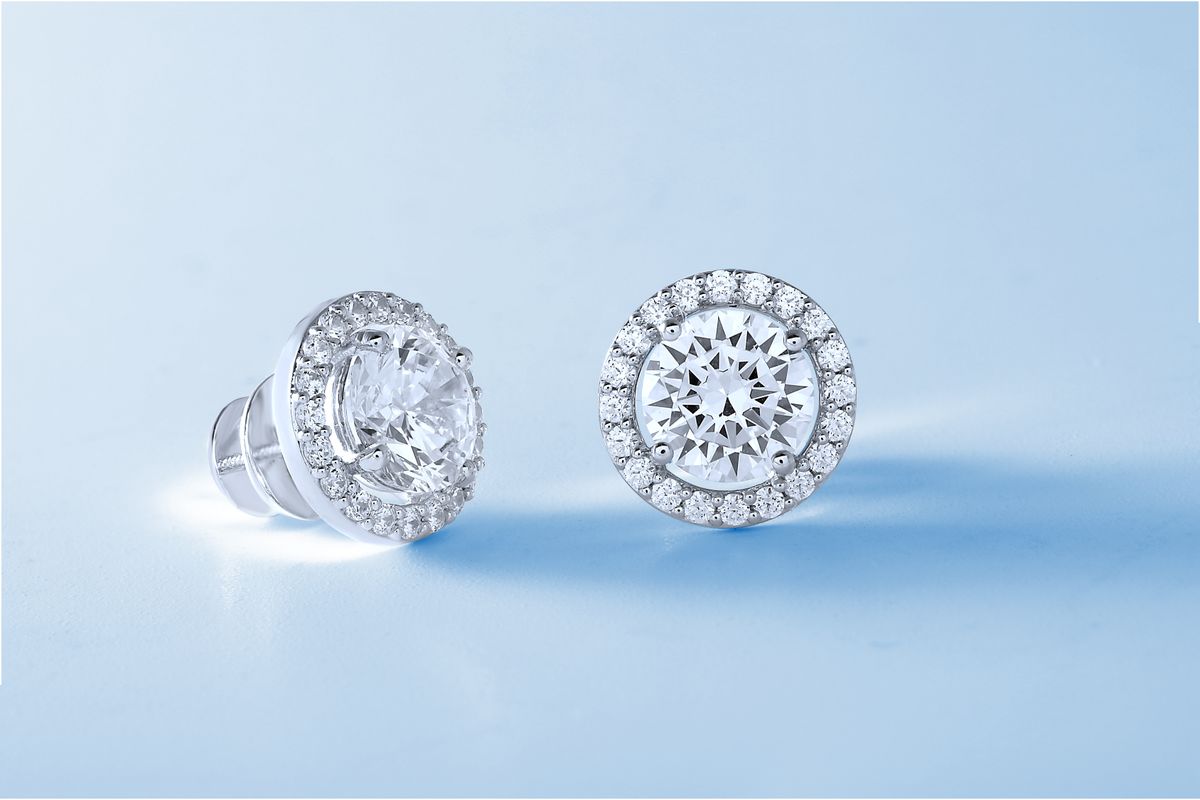
What Carat Diamond Is Best for Stud Earrings? The Ultimate 2026 Guide
A Practical Guide to Total Carat Weight, Individual Diamond Size, Sparkle, Budget, and Everyday Wear
Quick Summary
If you are shopping for diamond stud earrings, the “best” carat weight is not one fixed number. For many people, 0.50 to 1.00 carat total weight is a comfortable range that gives noticeable sparkle without making the earrings feel unnecessarily large or difficult to wear. If you want a more understated everyday pair, 0.25–0.50 carat total weight can be a very practical choice. If you want studs that make more of a statement, 1.00 carat total weight or more can create stronger presence.
The important detail is that earring carat weight is normally discussed as total carat weight (CTW). A pair marked 1.00 CTW usually means approximately 0.50 ct in each earring, not a 1.00 ct diamond in each ear. GIA's diamond-stud guide also points out that buyers should consider cut, color, and clarity rather than treating carat as the only decision. GIA's guide to choosing diamond stud earrings is a useful independent reference.
Key Takeaways
• 0.50–1.00 CTW is a versatile range for many diamond stud earring buyers.
• Always check whether a listing gives the weight for one earring or the pair.
• 0.25–0.50 CTW can be ideal for subtle, comfortable everyday studs.
• 1.00 CTW means roughly 0.50 ct per earring when the pair is evenly matched.
• Cut has a major effect on sparkle, so a larger poorly cut diamond is not automatically the better buy.
• Stud earrings are viewed from a normal conversational distance, so clarity often matters less than it does for a close-up ring.
• Round brilliant diamonds are a dependable choice when sparkle is the priority.
• A few points below popular “magic sizes” can sometimes give useful savings with very little visible difference.
Quick Answer:
For a balanced pair of diamond stud earrings, 0.50–1.00 carat total weight is an excellent starting point. If you want subtle everyday sparkle, look around 0.25–0.50 CTW. If you want the earrings to be clearly noticeable from across a room, 1.00 CTW or more may suit you better. GIA specifically recommends considering diamonds around 0.50 ct or larger when budget allows, while also noting that buying a few points below popular weights such as 0.50, 0.75, and 1.00 ct can reduce cost without sacrificing much visual impact. See GIA's diamond stud earring recommendations.
But do not stop at the number. The right pair is the one whose individual diamond size, cut quality, color, clarity, setting, and comfort match how you actually plan to wear the earrings.
Who Is This Guide For?
This guide is for someone buying diamond studs for the first time and wondering whether 0.25, 0.50, 0.75, 1.00, or 1.50 carats will look right. It is also useful if you have already found a pair online but cannot tell whether the advertised carat weight applies to one earring or both.
It is especially helpful for shoppers who want a pair they can wear regularly rather than only on formal occasions. Stud earrings live differently from engagement rings: people see them from farther away, they need to stay secure while moving around, and comfort can become more important than tiny differences in grading.
Introduction
There is a funny thing about shopping for diamond studs: the carat number looks simple until you actually start comparing pairs.
You might see “0.50 ct,” “1.00 CTW,” and “1.50 ctw” on different product pages and assume the numbers tell you exactly how large the earrings will look. They do not. The first question is always whether the number refers to one diamond or the combined weight of both earrings.
Then there is the visual side. A diamond stud is usually seen against the ear, hair, skin tone, and surrounding light. It is not inspected from a few inches away with a loupe. That changes how useful each of the 4Cs can be. GIA notes that inclusions in stud earrings are unlikely to be noticed at normal viewing distance, while cut is important because it affects how much the stones sparkle. GIA's detailed stud-earring guide explains this trade-off.
So the goal of this guide is not to tell you that one carat is “correct.” It is to help you translate carat weight into a real-world decision: How large will the earrings feel? How much sparkle will I get? Will I actually wear them? And where should my money go?
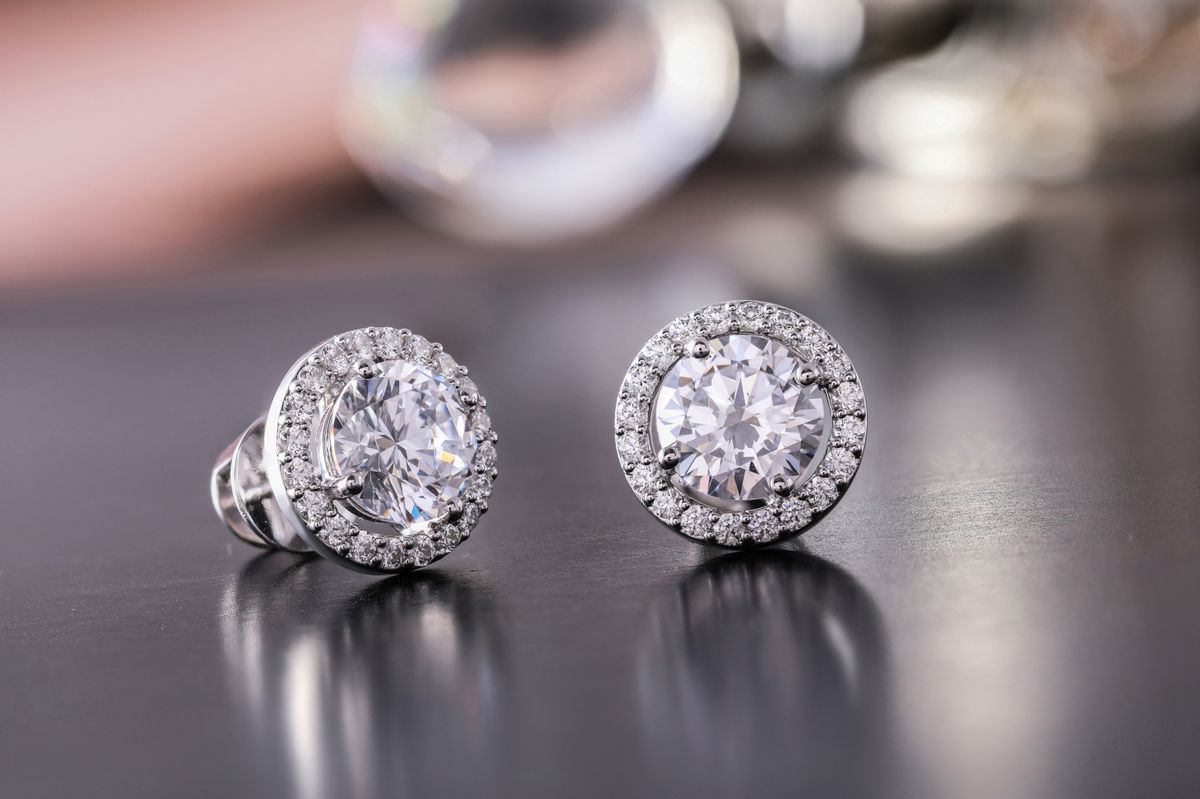
✦ CARAT WEIGHT TELLS YOU THE WEIGHT — NOT THE WHOLE STORY
What Does Carat Mean for Stud Earrings?
A carat is a unit of weight, not a direct measurement of visible diameter. One metric carat equals 0.20 grams, and a carat is divided into 100 points. GIA makes this distinction very clearly: carat measures how much a diamond weighs, while its visible dimensions also depend on the stone's proportions and shape. GIA's current carat-weight guide explains the measurement in more detail.
What Is Total Carat Weight?
For earrings, total carat weight is particularly important. If a matched pair contains two 0.50 ct diamonds, the pair has approximately 1.00 CTW. If each earring has a 0.25 ct diamond, the pair is approximately 0.50 CTW.
This is one of the easiest places to make an expensive mistake. Before comparing two listings, check the product details for “per diamond,” “per earring,” or “total carat weight.” A pair advertised at 1.00 CTW is very different from two separate 1.00 ct studs, which would be about 2.00 CTW together.
How Big Should Diamond Stud Earrings Be?
The answer depends on the look you want. There is no universal “right” size because a person who wants barely-there sparkle has a very different use case from someone who wants a pair that becomes part of their signature look.
| Total Carat Weight | Approx. Each Diamond | Typical Feel |
| 0.25 CTW | 0.125 ct | Very subtle, delicate |
| 0.50 CTW | 0.25 ct | Small, easy everyday sparkle |
| 0.75 CTW | 0.375 ct | Noticeable but still restrained |
| 1.00 CTW | 0.50 ct | Balanced, classic presence |
| 1.50 CTW | 0.75 ct | Bold and more eye-catching |
| 2.00 CTW | 1.00 ct | Statement-level presence |
These are approximate pair-level categories, not strict appearance guarantees. Diamond shape, cut proportions, setting style, ear size, hairstyle, and viewing distance can all change how large a pair appears.
Is 0.50 Carat Total Weight Enough for Stud Earrings?
Yes. A 0.50 CTW pair, usually around 0.25 ct per earring, is a sensible choice for someone who wants diamond studs that feel polished without dominating the ear.
This size works particularly well for daily wear, office outfits, casual clothing, and buyers who prefer jewelry that is noticed when someone is close rather than from across a room. It can also be a smart first pair because the earrings remain versatile enough to wear with other jewelry.
If your main concern is sparkle rather than size, putting more of your budget into cut can make a 0.50 CTW pair feel much more impressive than the number suggests. GIA specifically emphasizes cut for stud earrings because a brilliant cut arrangement can provide the sparkle and “pop” buyers expect.
Is 1.00 Carat Total Weight the Best Choice?
For many buyers, 1.00 CTW is the sweet spot. With roughly 0.50 ct in each ear, the diamonds have enough presence to be clearly visible while remaining a familiar, wearable stud size.
It is also a useful middle ground if you are buying a single pair to cover several situations. A well-made 1.00 CTW pair can work with everyday clothing, professional outfits, dinners, weddings, and other occasions without looking out of place.
There is one catch: 1.00 is a popular milestone. GIA calls certain weights “magic sizes” because demand can make the price per carat rise around those boundaries. That means a pair just below the milestone can sometimes give you a better value proposition. GIA's carat-weight explanation covers this pricing effect.
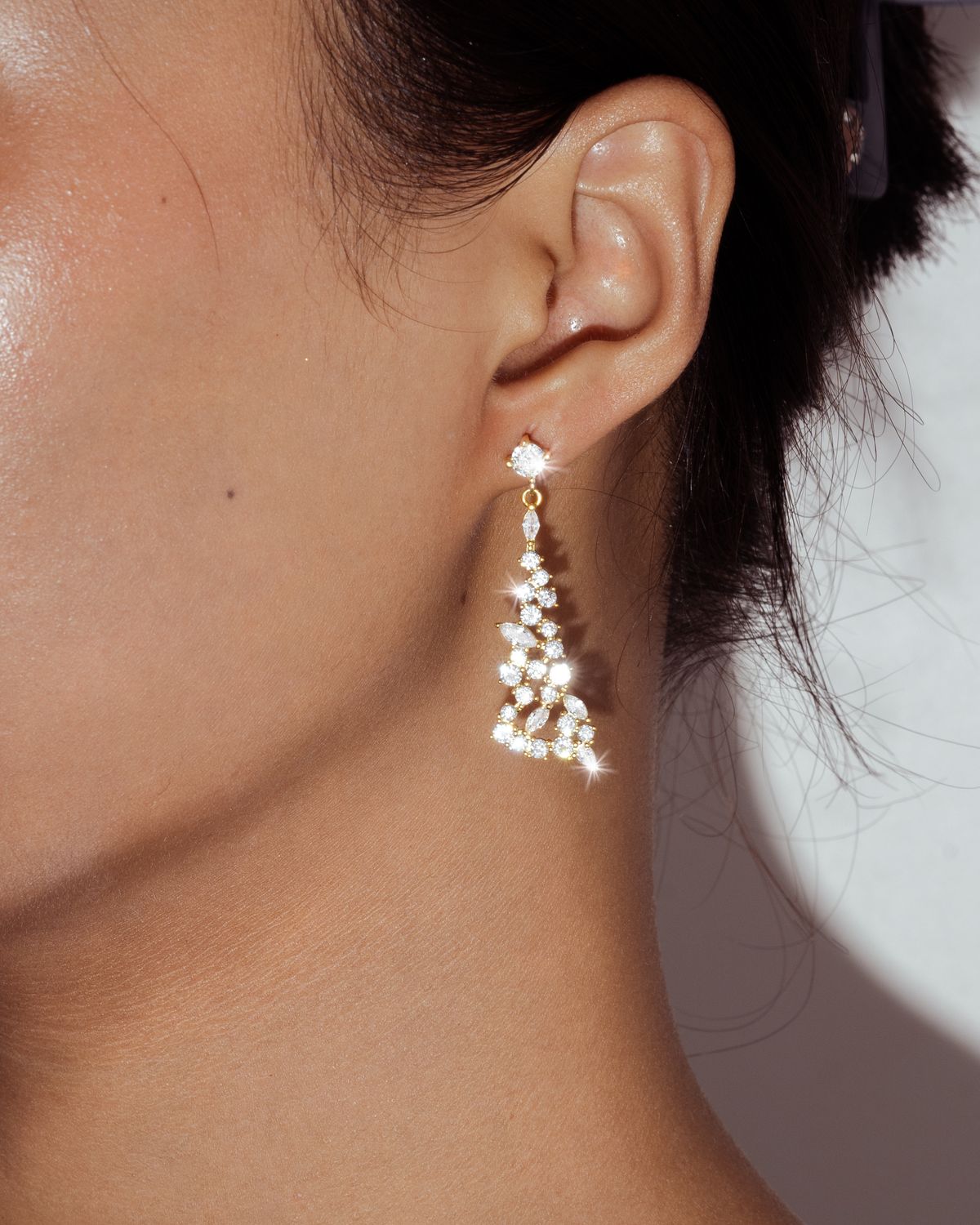
What Carat Is Best for Everyday Diamond Stud Earrings?
If you want to put your studs in most mornings and leave them on through a normal day, comfort should be part of the decision. A huge diamond may look impressive in a product photograph but can feel less practical if the setting, backing, or overall weight bothers you.
For many everyday buyers, 0.50–1.00 CTW is a useful range. It gives enough visual presence to make the earrings feel like fine jewelry while avoiding the need to chase maximum size.
Think about your routine. If you commute, work at a desk, wear headphones, sleep in your earrings, or prefer minimalist jewelry, a smaller pair may become the pair you actually reach for. If you enjoy noticeable jewelry and already wear larger necklaces or rings, moving toward 1.00 CTW or 1.50 CTW may feel more balanced.
Why Cut Matters So Much in Diamond Studs
A bigger diamond is not automatically a brighter diamond. Cut affects how effectively the stone handles light, which in turn influences brightness, fire, and scintillation. GIA's stud-earring guidance specifically recommends paying close attention to cut and says round brilliant studs with Excellent or Very Good cut grades can be strong options when sparkle is the priority.
This is especially important with earrings because sparkle is often the main reason people notice them. A smaller diamond that flashes as you move can look more lively than a larger stone with weaker proportions.
Round Brilliant: The Easy Choice for Maximum Sparkle
Round brilliant diamonds are a classic choice for studs because their facet arrangement is designed to return light efficiently. If you do not have a strong preference for an unusual shape, round is an easy place to start.
Fancy Shapes: More Personality, Different Presence
Oval, princess, cushion, pear, and other shapes can create a different visual effect. They may appeal to someone who wants their studs to feel less traditional. The trade-off is that shape comparisons are not as simple as comparing round diamonds by a standard cut grade, so look at the actual stone and its proportions rather than assuming a particular shape will always look larger.
Should You Spend More on Carat or Cut?
If your choice is between a slightly larger diamond with weak visual performance and a slightly smaller diamond with strong cut quality, I would generally lean toward the better-looking stone. The point of stud earrings is not to win a weight competition. It is to create a pair that catches light and looks good when you wear it.
GIA makes a similar point in its earring guide: carat should not be the only criterion, because a poorly cut diamond can look dull even if it weighs more. Read GIA's full earring buying guide.
What About Diamond Color for Stud Earrings?
Stud earrings are usually viewed from a greater distance than a ring, and the surrounding ear, hair, metal, and lighting can influence perceived color. That means you may not need to pay a premium for the very top of the D-to-Z color scale simply to get a beautiful-looking pair.
GIA's stud-earring guide specifically notes that choosing a more expensive colorless diamond can be less important for earrings and that buyers can potentially save by selecting a lower color grade, provided the stones still look attractive in their setting.
The best choice depends on the metal as well. White metals can make warmth more noticeable, while yellow gold naturally creates a warmer visual environment. Rather than buying the highest color grade automatically, look for a pair whose color works with the metal and the overall look you want.
How Much Clarity Do Diamond Stud Earrings Need?
This is one area where many first-time buyers overspend. You are unlikely to inspect your earrings from inches away under 10× magnification during normal life. GIA notes that inclusions and blemishes are unlikely to be noticed on stud earrings unless someone is extremely close to the earlobe with a jeweler's loupe.
That does not mean clarity never matters. A very included diamond can look darker or less attractive, and the stones in a matched pair should look consistent. The practical goal is to avoid paying for microscopic perfection that does not improve the appearance you can actually see.
If your budget is limited, this can be one of the areas where you redirect money toward better cut or a slightly larger visible size.
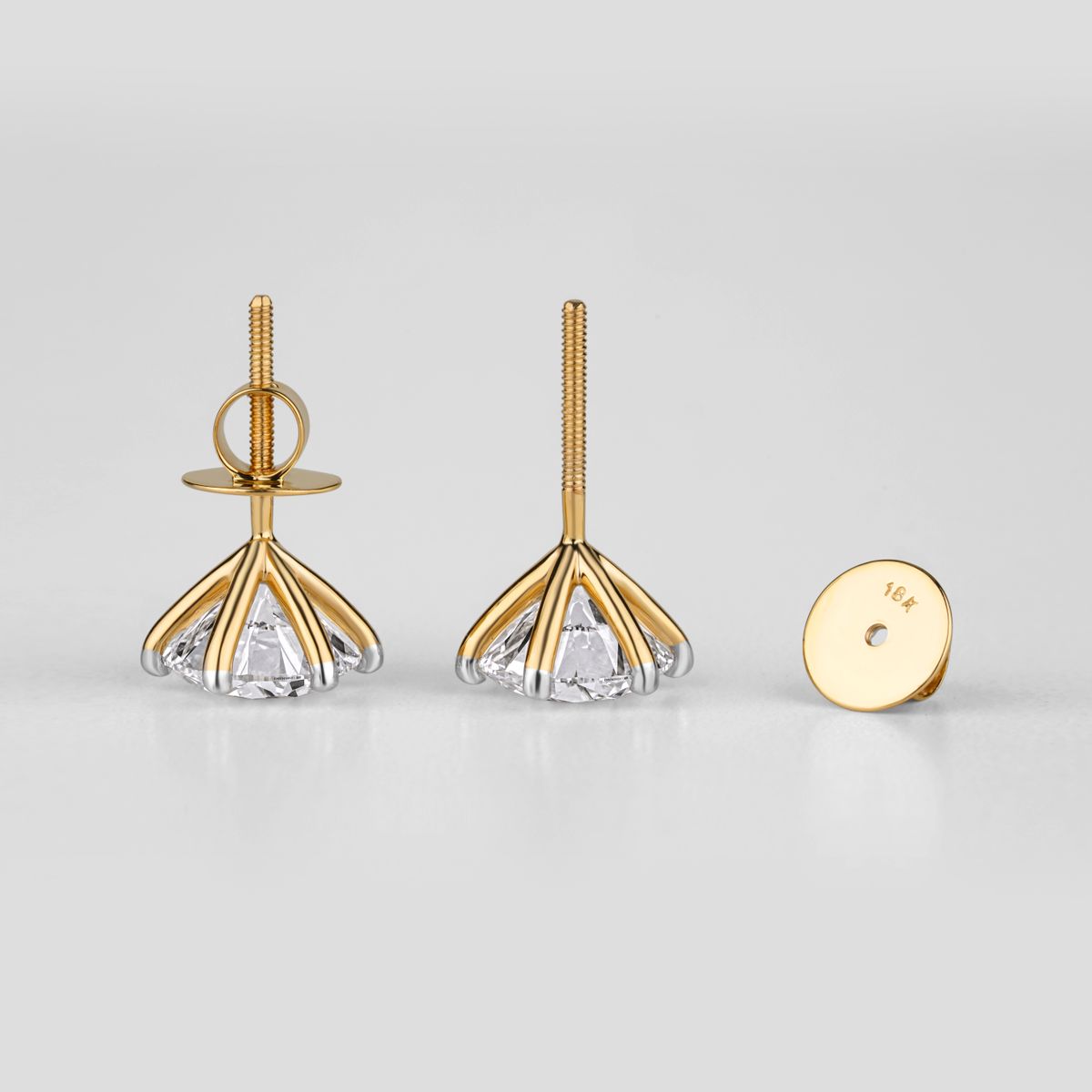
Should Both Earrings Have Exactly the Same Carat?
For a classic matched pair, yes, close matching is desirable. The two diamonds should look balanced in size, shape, color, and overall appearance. They do not necessarily need to have mathematically identical characteristics down to every tiny detail, but the finished pair should look intentionally matched.
When buying online, check whether the listed weight is total pair weight or individual weight. If the seller gives only a CTW figure, ask for the approximate weight of each diamond and the actual millimeter measurements.
What Size Diamond Studs Look Expensive Without Overspending?
A common mistake is assuming that the most expensive-looking pair must be the heaviest pair. In practice, proportion and sparkle can create a much stronger impression.
A smart value-focused strategy is to compare pairs just below popular weight thresholds. GIA explains that weights such as 0.50, 0.75, and 1.00 carat can act as “magic sizes,” where prices can rise even though the visual difference from a slightly smaller stone may be tiny.
For example, instead of insisting on exactly 1.00 CTW, compare a pair around 0.90–0.98 CTW with similar cut and appearance. The right comparison is not “Which number is bigger?” but “How much visible difference am I getting for the extra money?”
Diamond Studs for Different Budgets and Use Cases
For a First Pair
Start around 0.50 CTW if you want something small and versatile, or around 1.00 CTW if you want the pair to feel like a meaningful fine-jewelry purchase. Focus on a beautiful matched appearance rather than maximizing carat.
For Daily Minimalist Wear
Around 0.25–0.50 CTW can work well. These sizes can sit comfortably within a minimalist wardrobe and are less likely to compete with other jewelry.
For a Classic Gift
Around 0.75–1.00 CTW is a strong middle ground when you do not know exactly how bold the recipient likes their jewelry. It is noticeable without automatically feeling oversized.
For a Statement Pair
Consider 1.50 CTW and above if the wearer likes larger jewelry and wants the studs to remain visually prominent. At these weights, setting security, comfort, and the way the earrings sit on the ear become increasingly important.
A Simple Buying Checklist for Diamond Stud Earrings
1. Confirm the weight format. Ask whether the advertised carat figure is per diamond, per earring, or total carat weight.
2. Check the individual measurements. Millimeter dimensions tell you more about visible size than carat alone.
3. Prioritize sparkle. Cut quality matters because earrings are often noticed through flashes of light.
4. Do not automatically buy the highest clarity. Aim for an attractive, well-matched pair rather than microscopic perfection.
5. Compare color with the metal. Think about how the diamond will look in white, yellow, or rose gold.
6. Check the backing. A secure backing is part of the buying decision, especially for valuable studs.
7. Compare just-below-milestone weights. A slightly lower CTW may provide better value if the visual difference is minimal.
8. Think about how often they will actually be worn. The best pair is the one that fits your lifestyle, not just your wishlist.
Common Mistakes to Avoid
Mistake 1: Confusing CTW with the weight of one diamond. A 1.00 CTW pair is usually about 0.50 ct per ear.
Mistake 2: Paying for size while ignoring cut. A larger but poorly cut diamond may not give you the sparkle you expected.
Mistake 3: Buying the highest clarity automatically. Studs are rarely viewed close enough for tiny clarity differences to justify a major price jump.
Mistake 4: Judging only from a product photograph. Camera distance, lighting, cropping, and styling can all make earrings look larger than they do in normal life.
Mistake 5: Forgetting comfort. Earrings that look amazing but feel heavy or insecure may spend more time in the jewelry box than on your ears.
Frequently Asked Questions
What carat diamond is best for stud earrings?
For many buyers, 0.50–1.00 carat total weight is a versatile range. Around 0.50 CTW is subtle and practical, while 1.00 CTW gives more noticeable presence. The best choice depends on the wearer's style, budget, and how often the earrings will be worn.
Is 1 carat enough for diamond stud earrings?
Yes. If the pair is 1.00 CTW, it usually means approximately 0.50 ct in each earring. That is a classic, noticeable size for many people. If you mean two 1.00 ct diamonds, the pair would be about 2.00 CTW and would create a much larger look.
Is 0.50 CTW too small for diamond studs?
Not necessarily. A 0.50 CTW pair can be a very wearable choice for everyday jewelry, especially for someone who prefers subtle sparkle. The actual appearance also depends on diamond shape, cut, measurements, and the setting.
What does 1.00 CTW mean in earrings?
CTW means total carat weight. A 1.00 CTW pair of matched studs generally contains about 0.50 ct in each earring, for a combined weight of approximately 1.00 carat.
What diamond shape is best for stud earrings?
Round brilliant is a dependable choice if maximum sparkle and a classic appearance are your priorities. Other shapes can work beautifully if you want more personality. The important thing is to compare the actual proportions and appearance rather than choosing a shape only because it sounds larger.
Do diamond studs need high clarity?
Usually not to the same extent as a diamond that will be examined closely. GIA notes that inclusions in stud earrings are unlikely to be noticed at normal viewing distance. A visually clean, well-matched pair can often be a smarter use of the budget than paying for very high clarity that is difficult to see.
Should I buy exactly 0.50 or 1.00 carat?
Not automatically. Popular weight thresholds can affect pricing. GIA notes that diamonds just below magic sizes can look nearly identical while sometimes costing less. Compare the actual measurements, cut, appearance, and price before deciding.
Is cut more important than carat for diamond studs?
For visual sparkle, cut can make a very large difference. Carat determines weight, but cut influences how the diamond interacts with light. A slightly smaller diamond with strong cut quality can look more lively than a larger diamond with weaker proportions.
How do I know if diamond stud earrings are a good value?
Compare total carat weight, individual measurements, cut, color, clarity, metal, setting, backing, and documentation. Then compare the actual visual appearance and price with similar pairs. Avoid deciding from carat weight alone.
Final Thoughts
So, what carat diamond is best for stud earrings? For a lot of people, the answer lands somewhere between 0.50 and 1.00 CTW. That range gives you enough presence to enjoy the sparkle while keeping the earrings versatile for everyday wear.
But there is no prize for choosing the biggest number. The smartest pair is the one that looks bright, feels comfortable, matches well from ear to ear, and fits the way you actually dress.
If you are budget-conscious, compare just below the popular carat milestones. If sparkle matters most, prioritize cut. If you want a subtle everyday pair, do not be afraid of smaller diamonds. And if you want a statement look, increase the individual stone size rather than thinking only in terms of total carat weight.
Most importantly, remember to translate every carat number into per-ear size. Once you know whether a listing means 0.50 ct each or 0.50 CTW for the pair, shopping becomes much less confusing.
The best diamond studs are not the pair with the biggest number. They are the pair that gives you the right amount of sparkle every time you put them on.
|
Find Diamond Jewelry That Fits Your Style Explore Auvera Craft's fine diamond jewelry and choose a piece with thoughtful craftsmanship and a look you will enjoy wearing. |
© 2026 Auvera Craft · Handcrafted Fine Jewelry · USA

