
Cart
0

|
AUVERA CRAFT Handcrafted Fine Jewelry · Tennis Bracelet Guide · 2026 |
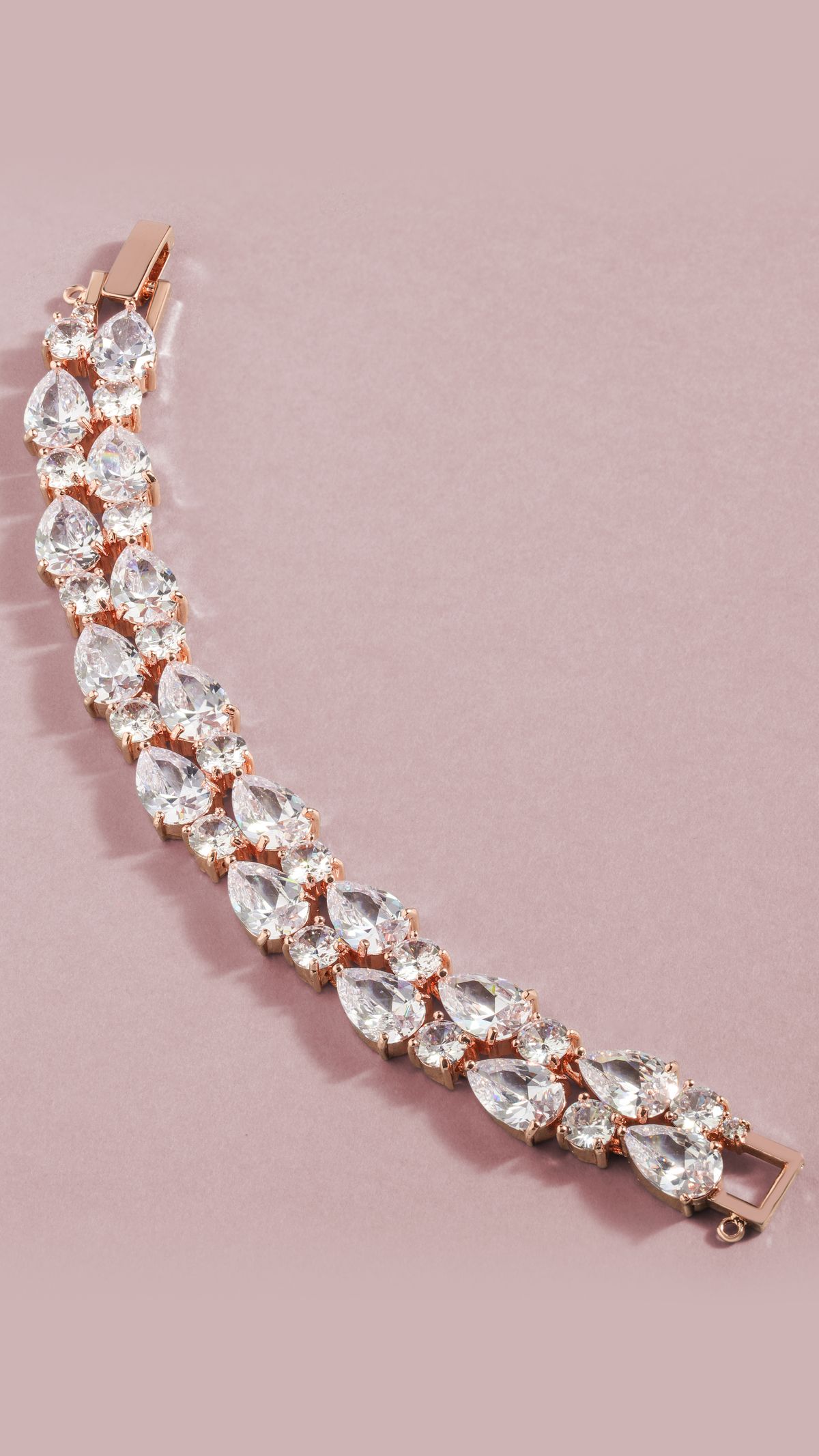
Should a Tennis Bracelet Be Tight or Loose? The Essential 2026 Guide
A practical guide to tennis bracelet sizing, comfort, movement, security, and everyday wear
Quick Summary
A tennis bracelet should be snug and comfortable, not tight. You want enough room for the bracelet to move naturally around your wrist without feeling restrictive, but not so much room that it slides toward your hand, twists constantly, or feels as though it could slip off. A useful starting point is the one-finger test: you should generally be able to slide one finger comfortably between the bracelet and your wrist.
That small amount of breathing room matters because a tennis bracelet is designed to move. Its linked sections need to follow the shape of your wrist, while the diamonds should remain presented in a way that lets them catch light. GIA's tennis bracelet buying guide recommends a comfortable, snug fit with enough movement and about one finger of space. GIA's tennis bracelet buying guide is a useful reference when comparing sizes.
The exact length, however, is personal. Your wrist circumference, the bracelet's construction, the clasp, your daily activities, and whether you prefer a close-to-the-wrist or slightly relaxed look all affect the final choice. A bracelet that looks perfect on someone else may feel completely wrong on your wrist.
Key Takeaways
• A tennis bracelet should feel secure and comfortable rather than tight.
• The one-finger test is a practical starting point for judging fit.
• Too-tight bracelets can feel restrictive and put unnecessary pressure on the clasp.
• Too-loose bracelets can slide, twist, snag, or create more opportunities for loss or damage.
• Measure your wrist where you actually plan to wear the bracelet, rather than guessing from a generic size.
• If you fall between sizes, comfort and security should guide the decision rather than choosing the smallest possible length.
• A good fit should still feel comfortable when you bend your wrist, type, reach, and move your hand normally.
Quick Answer:
A tennis bracelet should be slightly loose rather than tight, but it should not be loose enough to slide over your hand. The easiest check is to place one finger between your wrist and the bracelet. Your finger should fit without forcing the bracelet away from your skin. You should also be able to move your wrist without the bracelet digging in, while the bracelet should stay primarily around the wrist rather than traveling far up and down your arm.
GIA describes the ideal tennis bracelet as comfortable and snug, with enough room for movement but not so much that it slides excessively. Read GIA's tennis bracelet guidance. The same basic principle is echoed by current sizing guides from established jewelry retailers: secure enough to stay put, relaxed enough to move naturally. See Brilliant Earth's 2026 tennis bracelet size guide.
Who Is This Guide For?
This guide is for anyone shopping for a diamond tennis bracelet and wondering whether the bracelet should hug the wrist or have some visible movement. It is especially useful if you are buying online, ordering a bracelet as a gift, comparing 6.5-inch and 7-inch options, or deciding whether your current bracelet is simply too tight or too loose.
It is also for someone who already owns a tennis bracelet but keeps adjusting it throughout the day. If you find yourself pushing the bracelet back toward your wrist, checking the clasp repeatedly, or noticing an uncomfortable mark after wearing it, the problem may be the fit rather than the bracelet itself.
Introduction
Tennis bracelets have a very specific kind of beauty. When the fit is right, the bracelet seems to disappear into your outfit while the diamonds keep catching little flashes of light as your hand moves. When the fit is wrong, however, you notice the bracelet constantly.
Maybe it pinches when you bend your wrist. Maybe the clasp keeps moving to the top. Maybe the bracelet slides several inches toward your hand every time you reach for something. Or perhaps you chose a very close fit because you were worried about losing it, only to discover that your wrist feels uncomfortable by the end of the day.
The goal is not to make a tennis bracelet completely stationary. It is to find the small middle ground where it feels secure but still behaves like a flexible piece of jewelry. That is why “tight or loose?” is not really a two-choice question. The better answer is comfortable, secure, and slightly mobile.
In this guide, we will break down what a good fit feels like, how to measure your wrist, how much room to leave, what changes during the day, how the clasp affects security, and what to do if your bracelet is already the wrong size.
What Does a Proper Tennis Bracelet Fit Feel Like?
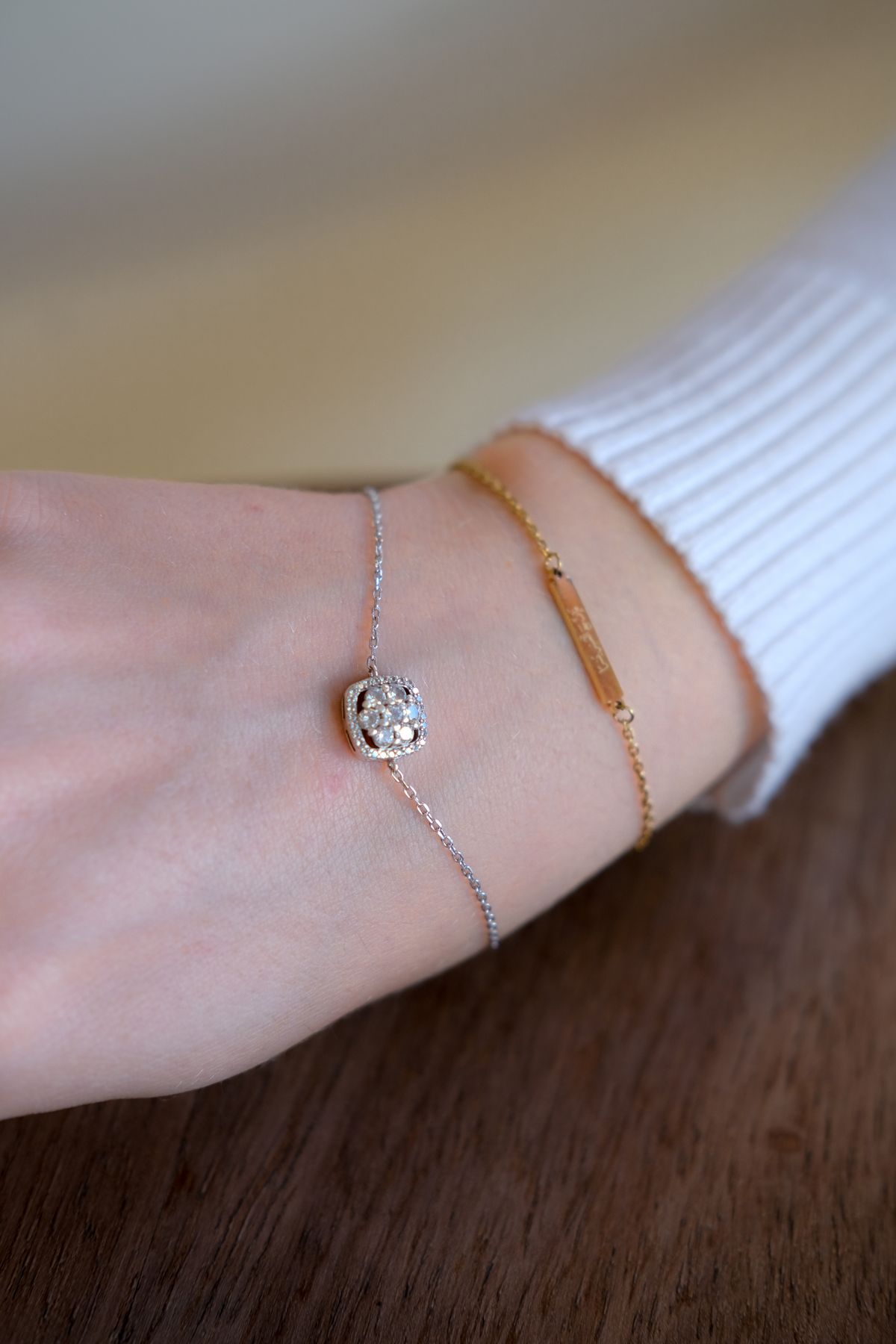
A properly fitted tennis bracelet should feel almost unremarkable after you put it on. You should know it is there, of course, but you should not be thinking about it every few minutes. It should follow the curve of your wrist and allow normal movement without cutting into the skin.
The bracelet should have a little freedom to slide. That movement is normal and desirable. A tennis bracelet is made from connected sections, so it needs to articulate as your wrist bends. Trying to lock it completely into one position can make the bracelet less comfortable and may place more pressure on the clasp.
At the same time, the bracelet should not behave like a loose chain. If it repeatedly moves toward the back of your hand, rotates dramatically, or feels capable of slipping over the widest part of your hand, it is probably too loose for everyday wear.
The One-Finger Test
The simplest practical test is to slide one finger underneath the bracelet. You should be able to do this comfortably without squeezing your finger into a tiny gap or pushing the bracelet far away from your skin.
Think of the test as a starting point, not a mathematical law. Finger sizes differ, wrist shapes differ, and bracelet construction differs. The real objective is enough room for natural movement without excessive sliding.
The Movement Test
After the finger test, rotate your wrist and move your hand normally. Type on a keyboard, reach forward, bend your wrist, and gently shake your hand. The bracelet should move with you without digging into your skin or traveling dramatically up and down your arm.
This is especially useful when buying a bracelet for everyday wear. A fit that feels perfect while your arm is completely still can become annoying once you start using your hands.
Why Too-Tight Is Not Better
It is understandable to think a valuable diamond bracelet should be worn as tightly as possible. After all, a tighter bracelet seems less likely to move or fall off. In practice, that approach can create its own problems.
A bracelet that is too tight can feel restrictive when the wrist bends. You may notice pressure around the clasp or small marks where the bracelet sits against the skin. It can also become much more noticeable after several hours of wear, especially when your wrist naturally changes size during the day.
The Federal Trade Commission's consumer jewelry guidance also emphasizes paying attention to quality, markings, and the details of a jewelry purchase rather than relying only on appearance. When buying a precious-metal tennis bracelet, ask what metal is actually used and how the piece is constructed. FTC guidance on buying gold, platinum, and silver jewelry is a useful consumer reference.
Why Too-Loose Is Not Better Either
The opposite problem is easier to notice. A bracelet that is too loose can move farther down the hand, rotate so the diamonds are no longer facing upward, and catch against clothing or objects.
Movement itself is not bad. The problem is uncontrolled movement. If the bracelet is constantly sliding and you need to reposition it several times a day, the length is probably not serving you well.
A loose bracelet can also make you more aware of the clasp. Every time it moves around the wrist, you may feel the clasp changing position. That does not automatically mean the clasp is defective, but repeated movement can make the bracelet feel less secure.
How to Measure Your Wrist for a Tennis Bracelet
Before choosing a bracelet length, measure your actual wrist. It sounds obvious, but many sizing mistakes happen because someone orders a “standard” size without checking where that size will sit on their own wrist.
Use a flexible measuring tape, soft string, ribbon, or even a strip of paper. Wrap it around the wrist at the place where you expect the bracelet to sit. Keep the material against the skin but do not pull it tightly.
Simple Measuring Steps
1. Find your wearing position. Decide whether you want the bracelet close to the wrist bone or slightly farther down toward the hand.
2. Wrap the tape around your wrist. Keep it comfortably snug rather than tight.
3. Record the circumference. If using string, mark where it meets and measure the string against a ruler.
4. Add your preferred ease. Use the one-finger test and the bracelet maker's own size chart as your final guide.
5. Check the finished length. Bracelet length and wrist circumference are not the same thing; the bracelet needs additional room for comfortable movement.
GIA recommends measuring carefully and choosing a tennis bracelet that is comfortable and snug while still allowing movement. Current sizing guidance from Brilliant Earth similarly recommends measuring around the wrist just below the wrist bone and using a one-finger space as a practical fit check. Brilliant Earth's 2026 tennis bracelet sizing guide.

What Size Tennis Bracelet Should You Buy?
There is no single tennis bracelet length that works for everyone. Sizes such as 6.5, 7, or 7.5 inches are simply common options, not universal standards for every wrist.
For example, a person with a smaller wrist may find a 6.5-inch bracelet comfortable, while someone else may need 7 or 7.5 inches for the same one-finger clearance. The construction of the bracelet also matters. A heavier design, a different clasp, or a bracelet with more substantial links can feel different even at the same nominal length.
| Fit | How It Feels | Best For |
| Close / snug | Minimal movement, still comfortable | People who prefer a close-to-wrist look |
| Balanced | One-finger space with natural movement | Most everyday wearers |
| Relaxed | More visible movement and drape | Those who prefer a looser style or stacking |
The middle option is usually the safest place to start. It gives the bracelet room to articulate without making it feel like it is floating around your hand.
Should a Tennis Bracelet Move Around?
Yes. A small amount of movement is normal. In fact, expecting a tennis bracelet to remain perfectly centered on top of your wrist all day is unrealistic.
Your wrist changes position constantly. When you type, the wrist bends. When you reach for something, the bracelet shifts. When your arm hangs at your side, gravity pulls the bracelet in a different direction. A flexible tennis bracelet is designed to accommodate that movement.
The important distinction is between gentle movement and excessive sliding. If the bracelet moves a little and returns naturally, that is fine. If it repeatedly slips toward your hand, twists dramatically, or feels as though it could pass over your hand, consider a smaller size.
How Your Wrist Changes During the Day
One reason a bracelet can feel different at 9 a.m. and 9 p.m. is that your wrist is not a fixed measurement. Heat, activity, hydration, and ordinary daily changes can affect how jewelry feels.
That is why choosing the smallest possible length based on a single measurement can backfire. A bracelet that feels “perfectly secure” when your wrist is at its smallest may feel uncomfortable later.
For everyday jewelry, comfort should be part of the security equation. If you are constantly thinking about how tight the bracelet feels, you are less likely to enjoy wearing it.
The Clasp Matters More Than Many Buyers Realize
Fit and clasp security work together. A well-sized bracelet can still be frustrating if the clasp is difficult to close, feels loose, or does not give you confidence when you move your wrist.
When shopping, ask what type of clasp and safety mechanism the bracelet uses. Do not judge the security of a tennis bracelet only by how tightly it fits. A properly fitted bracelet should not need to be painfully tight to feel safe.
It is also worth checking the clasp periodically. If you notice that it is opening unexpectedly, feels different from when you bought it, or has visible damage, stop treating the problem as a sizing issue and have the bracelet inspected.
Does the Diamond Setting Change the Ideal Fit?
Yes. Tennis bracelets are flexible, but they are not all built identically. The way diamonds are secured, the size of the links, the thickness of the metal, and the clasp design can change how a bracelet sits on your wrist.
A bracelet with substantial links may feel more noticeable than a delicate design. A very fine bracelet may also move differently because there is less material distributing the movement across the wrist.
This is one reason online sizing charts should be treated as a guide rather than a guarantee. If the bracelet is a meaningful purchase, ask the jeweler for the actual finished length and whether the bracelet can be shortened or adjusted later.
Can You Wear a Tennis Bracelet Every Day?
A tennis bracelet can be an everyday piece, but everyday wear does not mean wearing it through every activity. The bracelet still contains diamonds, metal links, settings, and a clasp that can be affected by impacts, chemicals, and rough handling.
Typing, office work, dinners, shopping, and ordinary social activities are very different from heavy lifting, sports, gardening, or work where the bracelet can catch on equipment. If you know an activity creates a realistic risk of snagging or impact, taking the bracelet off is the sensible choice.
GIA notes that diamonds are durable but can still be damaged by a hard blow, and jewelry settings can also be affected by wear. Its diamond care and cleaning guidance is useful for understanding why careful handling matters even with diamond jewelry.
How to Tell If Your Tennis Bracelet Is Too Tight
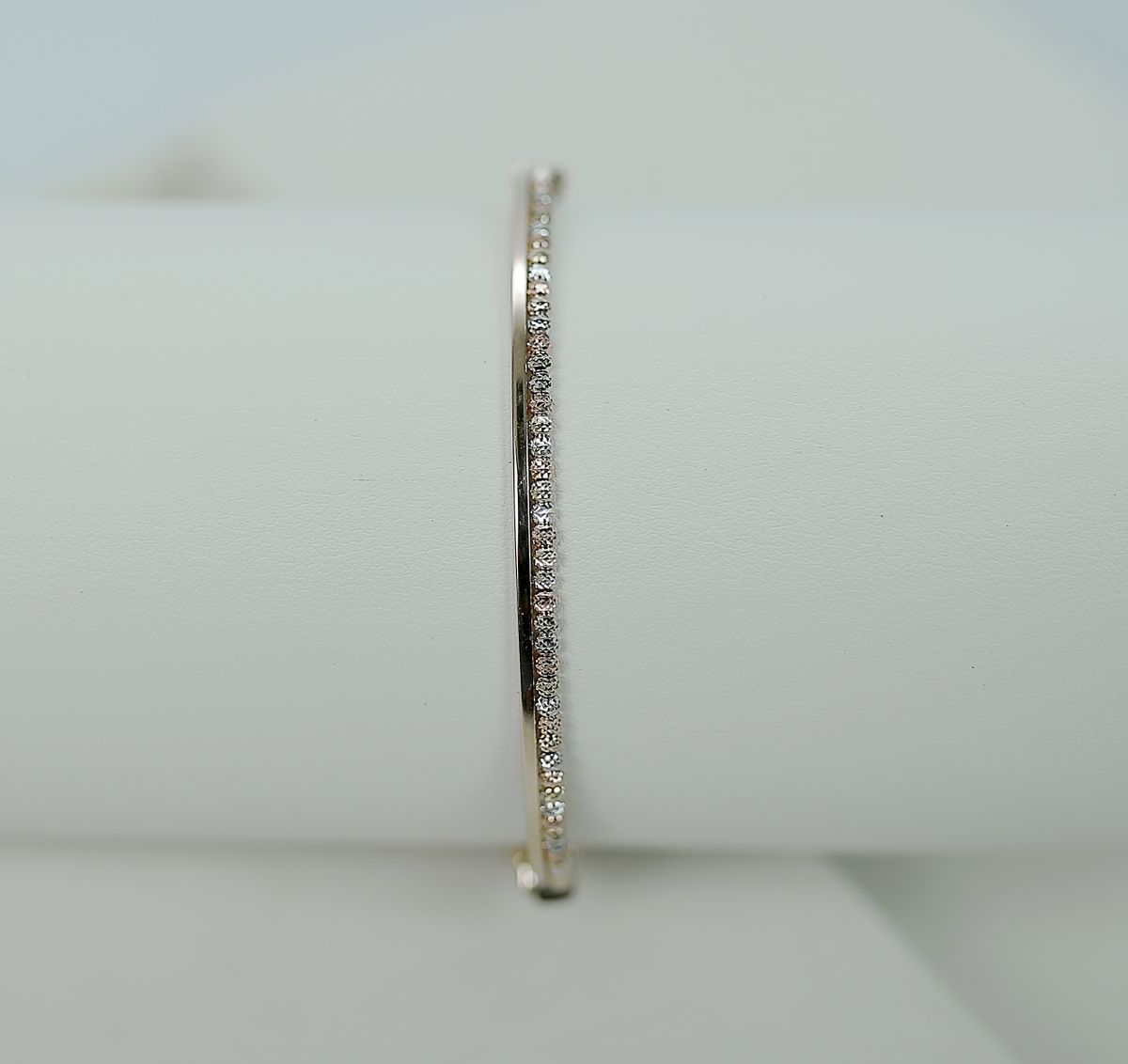
Your bracelet may be too tight if:
• You cannot comfortably slide one finger underneath it.
• The bracelet leaves a deep or uncomfortable mark after normal wear.
• The clasp presses into your wrist when you bend your hand.
• You feel pressure that becomes more noticeable after several hours.
• You are tempted to remove it simply because it feels restrictive.
If any of these happen, do not solve the problem by wearing the bracelet less tightly for short periods and hoping you will get used to it. Ask the jeweler whether the bracelet can be adjusted or whether a different length would be more appropriate.
How to Tell If Your Tennis Bracelet Is Too Loose
Your bracelet may be too loose if:
• More than one finger fits comfortably with plenty of extra room.
• It repeatedly slides toward the back of your hand.
• The bracelet spins so frequently that the diamonds spend long periods facing sideways or downward.
• You keep catching it on sleeves, bags, or nearby objects.
• You are worried it could slip over your hand if the clasp were to open.
What If You Are Between Two Sizes?
This is where personal preference becomes important. If you are between sizes, first decide how you actually want the bracelet to behave. If you want a close, polished look, the smaller option may be appropriate only if it still passes the comfort test. If the smaller size feels restrictive, do not choose it simply because it moves less.
If you prefer visible movement or plan to stack the tennis bracelet with other bracelets, you may appreciate the slightly longer option. Brilliant Earth's current guide specifically notes that people between sizes can choose the larger size for a more comfortable fit. See the current sizing guidance.
If the bracelet is expensive, ask whether the jeweler can shorten it after purchase. Knowing the adjustment options before buying can make the sizing decision much less stressful.
Should a Tennis Bracelet Fit Differently for Stacking?
It can. If you plan to wear a tennis bracelet with a watch, bangle, chain bracelet, or another diamond bracelet, a little additional movement may make the stack more comfortable. The pieces need space to move without constantly pressing into one another.
However, stacking does not mean the tennis bracelet should become so loose that it can slip over the hand. The same basic security test still applies.
For a minimalist look, a closer fit often looks especially clean. For a layered look, a slightly more relaxed fit can create natural separation between pieces. Neither is automatically better; the important thing is that the bracelet remains comfortable and secure.
Buying a Tennis Bracelet Online? Check These Details
1. Ask for the actual finished length. Do not rely only on labels such as “medium” or “standard.”
2. Confirm the metal. If the bracelet is gold, ask whether it is 14K, 18K, or another construction. The FTC explains that 14K and 18K represent different proportions of pure gold and other metals. Read the FTC's jewelry-marking guidance.
3. Ask about the clasp. Understand how it closes and whether it includes a safety feature.
4. Check the return or adjustment policy. Wrist sizing can be personal, so know your options before purchasing.
5. Ask about the diamonds. Find out whether the stones are natural or laboratory-grown and what documentation is provided.
6. Consider your real routine. A bracelet for office wear may be sized differently in practice from one intended for occasional evening wear.
Common Tennis Bracelet Fit Mistakes
Choosing the smallest size because it feels safer
Security comes from the right length and a dependable clasp, not from squeezing the bracelet against your skin. If a bracelet is uncomfortable, the size is not solving the underlying problem.
Assuming a standard size will fit everyone
A 7-inch bracelet is not automatically the “right” size. Measure your wrist and compare the result with the specific bracelet's sizing information.
Ignoring movement
Some movement is normal. Trying to eliminate every bit of movement can lead to an unnecessarily tight fit.
Only testing the bracelet while standing still
A bracelet that looks perfect on a stationary wrist may behave differently when you type, reach, bend, or rotate your hand. Test it in the movements you actually make every day.
Forgetting the clasp
The bracelet's length is only part of the security story. A comfortable fit should be paired with a clasp and safety mechanism you trust.
A Simple Tennis Bracelet Fit Checklist
Before keeping a new tennis bracelet, run through this quick checklist:
□ One finger fits comfortably between your wrist and the bracelet.
□ The bracelet can move without pinching.
□ It does not slide over your hand.
□ It does not repeatedly catch on clothing.
□ The clasp feels secure and closes correctly.
□ The bracelet remains comfortable after several minutes of normal movement.
□ The length matches how you plan to wear it, including whether you will stack it with other jewelry.
Tennis Bracelet Care After You Find the Right Fit
Once the fit is right, care becomes much easier. Keep the bracelet away from activities where it can take a hard impact or catch on something. Clean it gently and inspect the links and clasp from time to time.
GIA notes that diamonds are extremely hard but can still be damaged by a hard blow, and jewelry settings can loosen. It also advises caution with cleaning methods because aggressive cleaning or equipment can affect settings. GIA's diamond care and cleaning guide provides more detail.
For routine care, a soft lint-free cloth can remove oils and surface residue. If the bracelet needs a deeper cleaning or you notice a loose stone, damaged link, or questionable clasp, professional inspection is the safer move.
Frequently Asked Questions
Should a tennis bracelet be tight or loose?
It should be comfortably snug with some room to move. It should not pinch your wrist, but it should also not be loose enough to slide over your hand or move excessively up and down your arm.
How much space should be between a tennis bracelet and your wrist?
A common practical guideline is enough space to fit one finger comfortably between the bracelet and your wrist. This is a starting point rather than a rigid measurement because finger and wrist sizes vary. GIA uses the one-finger guideline in its tennis bracelet buying guide. GIA tennis bracelet guide.
Should a tennis bracelet move around?
Yes. Some movement is normal because the bracelet needs to follow your wrist as you move. The concern is excessive movement, such as repeatedly sliding toward your hand, spinning dramatically, or feeling close to slipping off.
Is a 7-inch tennis bracelet too big for a 6-inch wrist?
Not necessarily, but the fit depends on the bracelet's construction and the amount of movement you prefer. A one-inch difference can create a noticeably more relaxed fit. Measure the actual bracelet and use the one-finger test rather than relying on the numbers alone.
Should I size up or down if I am between tennis bracelet sizes?
If the smaller size feels restrictive, choose the larger option or ask whether the bracelet can be adjusted. A slightly relaxed bracelet is generally easier to live with than one that becomes uncomfortable during normal movement.
Can a tennis bracelet be too loose?
Yes. Too much extra length can make the bracelet slide toward your hand, rotate more often, and catch on clothing or objects. If it feels as though it could slip over your hand when the clasp is closed, have the sizing checked.
Can a tennis bracelet be too tight?
Yes. If you cannot comfortably fit a finger underneath it, it leaves uncomfortable marks, or it feels restrictive when you bend your wrist, it may be too tight.
Can I wear a tennis bracelet every day?
You can wear a tennis bracelet regularly, but it is sensible to remove it for activities involving heavy impact, rough work, chemicals, or a high risk of snagging. Regular inspection and gentle cleaning can also help keep the bracelet in good condition.
What is the best wrist to wear a tennis bracelet on?
There is no universal rule. Many people prefer the non-dominant wrist because it may experience fewer knocks during everyday tasks, while others choose the wrist that works best with their watch and other jewelry. Comfort and lifestyle matter more than a fixed rule.
How do I measure my wrist for a tennis bracelet?
Wrap a flexible measuring tape or a strip of string around your wrist where the bracelet will sit. Keep it comfortably snug, record the circumference, and then compare it with the specific bracelet's size chart and recommended fit. Do not pull the tape tightly.
What should I ask a jeweler before buying a tennis bracelet?
Ask for the finished length, metal purity, diamond details, clasp and safety mechanism, adjustment options, return policy, and any available grading or product documentation. The FTC recommends that consumers understand jewelry descriptions and markings and review seller policies before buying. FTC Jewelry Guides.
Final Thoughts
So, should a tennis bracelet be tight or loose? The best answer is neither extreme.
A good tennis bracelet has a little breathing room. It can slide gently, follow your wrist, and move when you move. At the same time, it should remain secure enough that you are not constantly pushing it back into place or worrying that it could slip over your hand.
Start with the one-finger test, then test the bracelet while you actually use your hands. Bend your wrist. Type. Reach forward. Move normally. If the bracelet stays comfortable through those simple movements, you are much closer to the right fit.
And remember: the correct size is not necessarily the smallest size you can fasten. A tennis bracelet is meant to be worn and enjoyed. The ideal fit is the one that gives you comfort, security, and natural movement at the same time.
The perfect tennis bracelet fit is not the one that never moves. It is the one that moves with you without making you think about it.
|
Find Fine Jewelry With Confidence Explore Auvera Craft's handcrafted fine jewelry and diamond designs, created with thoughtful details for everyday elegance. |
© 2026 Auvera Craft · Handcrafted Fine Jewelry · USA

