
Cart
0
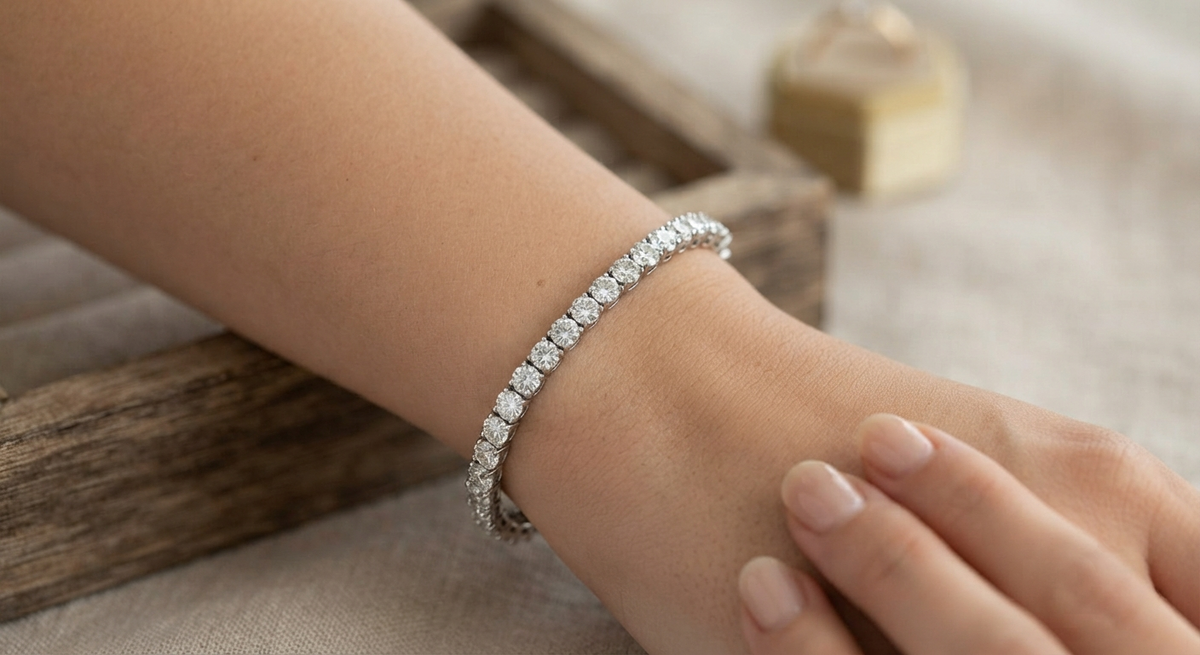
|
AUVERA CRAFT HANDCRAFTED FINE JEWELRY · TENNIS BRACELET GUIDE · 2026 |
How Many Carats Should a Tennis Bracelet Be? The Perfect 2026 Guide
A Practical Guide to Total Carat Weight, Sparkle, Size & Everyday Style
Quick Summary
There is no magic number that makes a tennis bracelet “the right” number of carats. A tennis bracelet is built from many individual diamonds, so the carat figure shoppers usually see is total carat weight (TCW)—the combined weight of the diamonds in the bracelet.
For many shoppers, roughly 2 to 4 total carats is a useful range to start comparing. It can create visible sparkle without automatically pushing the bracelet into a very wide or heavy look. But that is a starting point, not a rule. A delicate 1.5-carat bracelet can be exactly right for one person, while someone else may prefer 5 carats or more for a stronger diamond presence.
The part that often gets missed is that carat measures weight, not visual size. GIA explains that a metric carat equals 200 milligrams and that two diamonds with the same carat weight are not necessarily equal in appearance or quality. The same idea matters when comparing tennis bracelets: total carat weight should be considered alongside cut, stone size, matching, setting, metal, wrist size and budget. GIA's diamond carat-weight guide is a useful reference. citeturn0search5
Key Takeaways
• Around 2–4 total carats is a useful comparison range for many everyday tennis-bracelet shoppers.
• Total carat weight means the combined weight of all the diamonds, not one large center stone.
• Carat is weight, so it should never be used as a shortcut for visible size or sparkle.
• Cut, matching, color, clarity, stone dimensions and setting quality can change the look dramatically.
• A 0.50-carat difference may be less noticeable than expected if the bracelet width and individual diamond sizes remain similar.
• Bracelets near popular weight milestones can carry different pricing even when the visual difference is subtle.
• Your wrist size and the look you want—delicate, classic or statement—matter as much as the number on the product page.
• A secure clasp and sensible fit are important because a tennis bracelet contains many individual stones and links.
Quick Answer:
For most shoppers, start by comparing tennis bracelets around 2 to 4 total carats, then choose based on how the bracelet actually looks on your wrist. A 2-carat bracelet can be elegant and understated; 3–4 carats can give a more noticeable everyday diamond presence; and 5 carats or more can create a bolder look. There is no universal “best” carat weight because total carat weight is only one part of the design.
GIA notes that tennis-bracelet price varies with total carat weight, gemstone quality and metal, and that diamond reports can provide independent information about characteristics such as color, clarity, cut and carat weight. citeturn0search1
Who Is This Guide For?
This guide is for anyone shopping for a diamond tennis bracelet and feeling stuck between numbers such as 1.5, 2, 3, 4 and 5 carats. It is especially useful if you want a bracelet that looks luxurious without paying for carat weight that does not meaningfully improve the appearance.
It is also for gift buyers who know the recipient likes tennis bracelets but do not know whether they prefer delicate everyday jewelry or a more noticeable statement piece. Instead of treating carat as a universal size chart, this guide shows you how to connect total weight with real-world appearance, budget, comfort and use.
Introduction
Shopping for a tennis bracelet can feel strangely different from shopping for a diamond ring. With a ring, people often ask, “How many carats is the center stone?” With a tennis bracelet, there may be dozens of diamonds, all working together. The number on the product page therefore tells you something important—but not everything.
A 3-carat tennis bracelet does not look like a 3-carat diamond ring. The weight is distributed across multiple stones, and the bracelet's visual impact comes from their combined coverage around your wrist. The width of the bracelet, the size of each individual diamond, the setting style and even the way the bracelet moves can change your impression of the same total weight.
That is why the best buying process starts with the question, “What do I want this bracelet to look and feel like?” Once you answer that, carat weight becomes much easier to use.
What Does “Carat” Mean on a Tennis Bracelet?
Carat is a unit of weight. GIA states that one metric carat equals 200 milligrams and that a carat is divided into 100 points. So a 0.25-carat diamond weighs 25 points, while a 1.00-carat diamond weighs 100 points. citeturn0search5
On a tennis bracelet, however, you normally see a total carat weight. If a bracelet contains 30 diamonds and the combined weight of those diamonds is 3.00 carats, the bracelet can be described as having 3.00 total carats of diamonds.
This distinction is important because a tennis bracelet with many smaller stones can have the same total carat weight as another bracelet using fewer, larger stones. They can look noticeably different even though the number of total carats is identical.
Total Carat Weight vs. Individual Diamond Size
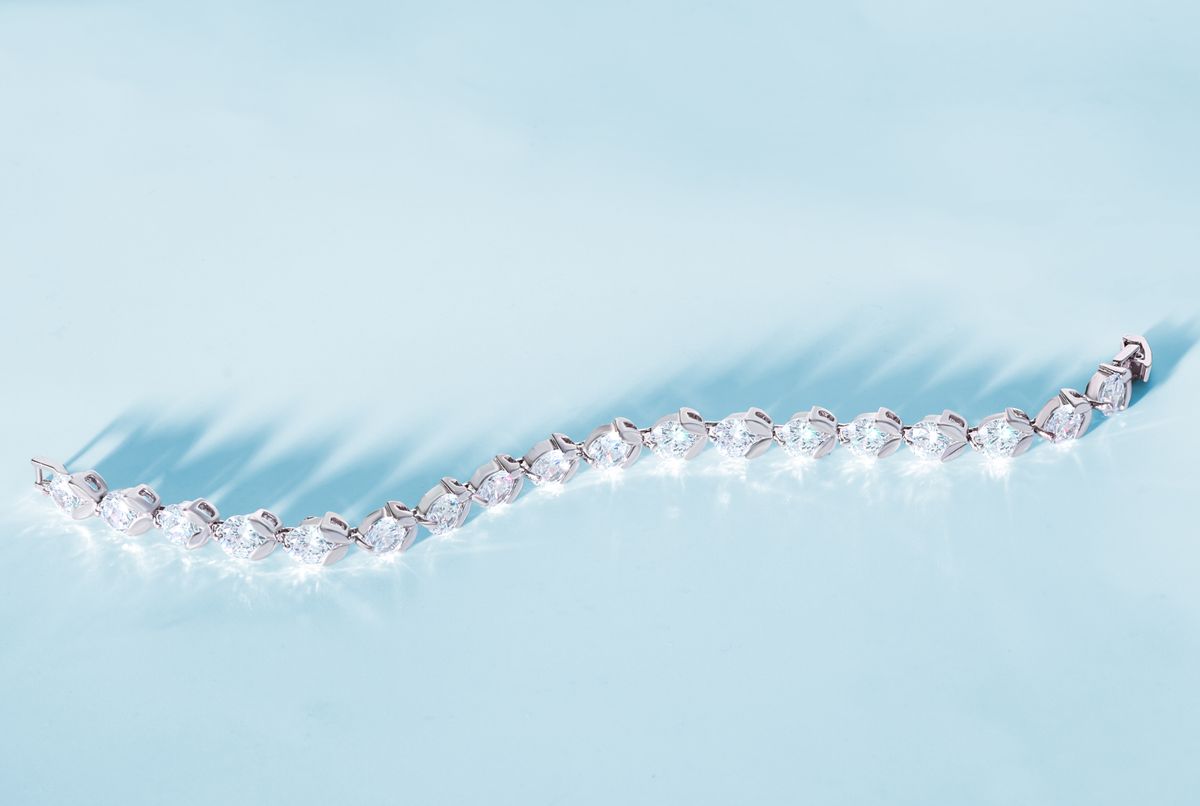
Imagine two bracelets that both contain 3 carats of diamonds. Bracelet A uses many small stones across a narrow line. Bracelet B uses fewer, larger stones in a wider design. The total weight may match, but Bracelet B can look bolder because each diamond has more individual presence.
There is no universally better arrangement. Smaller stones can create a fine, continuous ribbon of sparkle, while larger stones can make the bracelet feel more substantial. The choice is mostly about the visual language you prefer.
This is also why asking only, “Is it 3 carats?” is not enough. Ask how many stones are used, what their approximate individual sizes are, how wide the bracelet is, and how the diamonds are set.
So, How Many Carats Should a Tennis Bracelet Be?
If you want a practical starting point, compare these ranges:
| Total Carat Weight | Typical Visual Direction | Good For |
|---|---|---|
| 1–2 ct | Delicate, light and understated | Minimalist daily wear, smaller wrists, first tennis bracelet |
| 2–3 ct | Classic sparkle without an oversized feel | Everyday luxury, gifting, versatile styling |
| 3–4 ct | Noticeable diamond presence with a balanced look | Signature everyday piece, dressier styling |
| 4–5 ct | Bolder coverage and stronger visual impact | Statement wear, larger wrists, special occasions |
| 5+ ct | High-impact, substantial diamond look | Statement jewelry and buyers prioritizing diamond presence |
These ranges are not industry rules or guarantees of appearance. They are simply a useful way to organize your search. The actual result depends on the bracelet's dimensions and diamond distribution.
Is 2 Carats Enough for a Tennis Bracelet?
Absolutely. A 2-carat tennis bracelet can be a smart choice when you want something refined rather than dramatic. It can work particularly well as a first tennis bracelet because it introduces the continuous diamond look without forcing you into a wide, heavy design.
The trick is to judge the bracelet on your wrist, not only on a product specification. A narrow 2-carat bracelet may look beautifully delicate. If your personal style leans toward bold jewelry, you may eventually prefer more coverage.
For someone buying a bracelet to wear with a watch, stack with other bracelets or keep on through ordinary office and social life, this moderate approach can be especially practical.
What About 3 or 4 Carats?
This is where many shoppers find a comfortable middle ground. Three or four total carats can give a tennis bracelet enough diamond presence to look intentional and luxurious without automatically becoming a statement piece.
If you want one bracelet that can move from jeans to dinner to a formal event, this range is worth trying on. It is also a good comparison point when you are deciding whether spending more for 5 carats will actually improve the look enough to justify the difference.
Do not assume the heavier option wins. Compare the bracelets side by side under similar lighting. Look at how much of the wrist each one visually covers and whether the diamonds look lively rather than simply larger.
Is 5 Carats Too Much?
Not automatically. Five carats can be elegant, especially when the bracelet is designed with balanced proportions. The question is whether the extra weight creates the visual presence you want.
A 5-carat bracelet may suit someone who wants the bracelet to be the main piece of jewelry on the wrist. It can also work beautifully for evening wear. But if your normal wardrobe is minimalist, a lower total weight may feel more natural and easier to wear every day.
Think about your actual use. A bracelet that spends most of its life in a jewelry box because it feels too bold is not necessarily a better purchase than a lighter bracelet that you wear constantly.
Carat Weight Is Not the Same as Size
This is one of the most important ideas in diamond buying. GIA explicitly explains that carat measures weight, not size. A diamond's visible dimensions depend on its measurements and proportions, and two diamonds with the same weight can have different face-up appearances. citeturn0search5
The same principle applies across a tennis bracelet. If a bracelet's diamonds are cut and proportioned differently, the total carat figure alone will not tell you exactly how much diamond coverage you will see.
So when a seller says “3 carat tennis bracelet,” read that as the beginning of the conversation, not the conclusion.
Why Cut Matters for a Tennis Bracelet
Cut controls how a diamond interacts with light, so it has a direct relationship with the lively sparkle people expect from a tennis bracelet. A bracelet made with poorly performing stones can have plenty of total weight and still look less energetic than a lighter bracelet with well-cut diamonds.
GIA's tennis bracelet guide notes that stone shape and cut style affect brilliance, pattern and the overall design. Prong settings allow light to enter from multiple angles, while bezel and channel styles can offer different balances of protection, smoothness and visual character. citeturn0search1
For a bracelet, consistency also matters. You are looking at many diamonds together, so mismatched appearance can become noticeable even if every individual stone looks acceptable on its own.
Does Clarity Matter as Much as Carat?
Clarity matters, but it should be considered in context. You are not buying one giant diamond that will be examined from inches away. A tennis bracelet contains multiple small diamonds, and the overall visual effect is created by the group.
That means it can be sensible to prioritize lively appearance, consistent matching and overall craftsmanship instead of automatically paying for the highest clarity grade available. If an upgrade in clarity makes little visible difference at normal viewing distance, the same budget may sometimes be more useful elsewhere.
The exact balance depends on the stones and design. Ask to see representative stones or clear product photography rather than assuming a higher clarity label automatically means a more beautiful bracelet.
What Diamond Color Should a Tennis Bracelet Have?
Color is another place where shoppers can accidentally spend more than necessary. The metal color and the overall design influence how the diamonds are perceived. White metal can create a bright, icy contrast, while yellow gold can make slightly warmer diamond tones feel intentional and harmonious.
There is no single color grade that every tennis bracelet needs. What matters is whether the stones look consistent together and whether their appearance works with the metal.
If you are comparing two bracelets with similar total carat weight, look at them next to each other. The bracelet that appears more uniform and lively may be the better choice even if its specification sheet is not the one with the highest grade.
Round Diamonds vs. Other Shapes
Round diamonds are a classic tennis-bracelet choice because they deliver a familiar, continuous sparkle. Other shapes can create a more distinctive visual rhythm and may change the bracelet's width and profile.
Shape is therefore part of the carat decision. If you love a sleek, traditional line of sparkle, round stones are an easy place to start. If you want something more architectural or modern, ask how the stone shape changes the bracelet's face-up coverage.
GIA's current tennis-bracelet guide discusses popular diamond cuts and explains that cut style can influence brilliance, pattern and overall design. citeturn0search1
How Wrist Size Changes the Ideal Carat Weight
The same bracelet can look delicate on one wrist and more substantial on another. Wrist circumference changes the amount of space the bracelet needs to travel around, while wrist proportions affect how wide the diamond line feels.
If you have a smaller wrist, a lower total carat weight may provide plenty of visual coverage. On a larger wrist, a heavier or wider bracelet can sometimes look more proportionate.
This is why online shopping needs a little caution. Product photos can make every bracelet look similar because the camera angle and crop hide scale. Always check the bracelet length and width, not just the total carat weight.
Carat Weight and Bracelet Width
Width is one of the most useful specifications to ask about. Two bracelets with the same total carat weight can distribute their diamonds differently. A narrow bracelet can spread smaller stones across the wrist, while a wider design can use larger stones or more substantial settings.
When comparing products, create a simple checklist: total carat weight, bracelet width, individual stone size, number of stones, diamond quality, metal and clasp. This takes only a minute and makes product pages much easier to compare.
Should You Pay More to Reach a Round Number?
Popular carat milestones can influence pricing. GIA notes that certain weights, including 1.00, 1.50 and 2.00 carats, are considered “magic sizes” for diamonds and that a 0.99-carat diamond can be visually difficult to distinguish from a 1.00-carat diamond even though the price can differ significantly. citeturn0search5
A tennis bracelet is more complicated because the weight is spread across many stones, but the broader buying lesson still matters: do not assume a neat number automatically produces a proportionally better-looking piece.
Ask what you are actually gaining. If moving from 2.9 to 3.0 total carats barely changes the bracelet's appearance but substantially changes the price, you may prefer to keep the budget and put it toward cut quality, metal, craftsmanship or another design feature you can actually appreciate.
How Much Should You Spend on Carat Weight?
There is no universal price-per-carat rule for a finished tennis bracelet because the bracelet includes many diamonds, metal, labor, settings, clasp components and finishing. GIA specifically notes that price can vary with total carat weight, gemstone quality and metal. citeturn0search1
A better strategy is to set your total jewelry budget first. Then compare the best-looking bracelets within that ceiling. This prevents the common mistake of starting with a carat target and continuously increasing the budget to reach it.
For example, if your budget comfortably supports a beautiful 3-carat bracelet but reaching 4 carats forces major compromises in the stones or construction, the 3-carat piece may be the smarter purchase.
Lab-Grown Diamond Tennis Bracelets
Lab-grown diamonds can also be used in tennis bracelets. If you are considering one, use the same visual-first approach: compare cut, color, clarity, matching, individual stone size, total carat weight and setting quality.
The FTC's Jewelry Guides emphasize that jewelry descriptions should accurately represent characteristics such as type, quality, quantity, size, weight, cut, color and other material information. citeturn0search2turn0search0
In other words, “3 carats” should not be the only thing you evaluate. Know what that 3-carat figure represents and what you are getting for the complete price.
What to Ask Before Buying a Tennis Bracelet
Before you buy, ask these questions:
• Is the stated carat figure the total carat weight?
• How many diamonds are used?
• What is the approximate size of each individual diamond?
• What diamond shape and cut style are used?
• Are the stones matched for appearance?
• What are the color and clarity ranges?
• What metal and karat is the bracelet made from?
• What is the bracelet's actual width?
• How long is the bracelet, and what wrist size is it designed to fit?
• Does the clasp include a safety feature?
• Is there a grading report or other documentation for the diamonds, where applicable?
• What care or inspection is recommended?
Common Mistakes When Choosing Carat Weight
1. Choosing the biggest number
More carats can mean more diamond weight, but not automatically a better-looking bracelet. Bigger can also mean wider, heavier or less compatible with your normal wardrobe.
2. Ignoring individual stone size
Total carat weight hides how the weight is distributed. Ask how many stones create the total.
3. Forgetting the wrist
A bracelet should be judged on the person who will wear it. Scale matters.
4. Spending the whole budget on carat
A slightly lighter bracelet with better overall balance can be more satisfying than a heavier bracelet built around compromises.
5. Treating product photos as exact scale
Photos can be cropped, enlarged or styled to emphasize sparkle. Always check measurements and, when possible, try on a similar width.
6. Forgetting the clasp and construction
A tennis bracelet is flexible jewelry that moves with the wrist. Secure construction matters just as much as the diamond specification.
How Should a Tennis Bracelet Fit?
Carat weight is only half the everyday-wear question. Fit matters too. GIA recommends a tennis bracelet that is comfortable and snug, with enough room for some movement but not so much that it slides excessively. The guide suggests being able to fit one finger between the wrist and bracelet. citeturn0search1
A bracelet that is too tight can feel restrictive. One that is too loose can move more than you want and may catch on objects. The ideal fit is the middle ground: comfortable, secure and able to move naturally with your wrist.
Can You Wear a Tennis Bracelet Every Day?
Many tennis bracelets are designed for versatile wear, and diamonds are well suited to frequently worn jewelry. But “everyday jewelry” does not mean “wear it through everything.” Heavy impact, rough work and situations where jewelry can snag or be lost are still worth avoiding.
GIA describes tennis bracelets as versatile from everyday wear to formal occasions and highlights secure clasps as an important part of their practical design. citeturn0search1
For cleaning, GIA recommends regular care and notes that harsh home-cleaning methods can create risks for jewelry settings. Its care guidance recommends safer approaches and professional attention when appropriate. citeturn0search7turn0search6
2 Carats vs. 3 Carats vs. 4 Carats: Which Should You Pick?
Choose around 2 carats if you want delicate sparkle, easy stacking and a bracelet that does not dominate your wrist.
Choose around 3 carats if you want a classic middle ground with visible diamond presence while keeping the overall look versatile.
Choose around 4 carats if you want more noticeable coverage and a stronger statement without automatically moving into an extremely bold bracelet.
Choose 5+ carats if your priority is substantial diamond presence and you are comfortable with a wider or more attention-grabbing design.
But do one final test: ignore the numbers for a moment and look at the bracelets side by side. Which one makes you want to keep looking at your wrist? That answer is often more useful than the largest carat figure.
A Simple Buying Formula
If you want a straightforward way to shop, use this order:
1. Set your total budget → 2. Decide delicate, classic or bold → 3. Choose a practical wrist fit → 4. Compare 2–4 carat options → 5. Check individual stone size and width → 6. Compare cut and overall sparkle → 7. Review color, clarity and matching → 8. Check metal and clasp → 9. Confirm total carat weight and documentation → 10. Choose the bracelet you would actually wear.
This approach keeps the decision grounded in the finished piece instead of turning the purchase into a race for the highest number.
Frequently Asked Questions
How many carats is good for a tennis bracelet?
There is no single correct carat weight. Around 2 to 4 total carats can be a practical starting range for someone who wants noticeable sparkle without an especially wide bracelet, while lower and higher total weights can both make sense depending on wrist size, budget, stone size and desired look.
Is 5 carats too much for a tennis bracelet?
Not necessarily. A 5-carat tennis bracelet can look elegant rather than excessive when the bracelet width, wrist size and setting are balanced. Total carat weight alone does not determine how bold the bracelet will look.
What does total carat weight mean on a tennis bracelet?
Total carat weight, often abbreviated TCW, refers to the combined weight of all the diamonds in the bracelet. It is different from the carat weight of one center stone because a tennis bracelet normally contains many individual diamonds.
Is a 2 carat tennis bracelet too small?
A 2-carat total-weight tennis bracelet can be a very wearable choice, especially for a slim or understated design. The actual appearance depends on the number, dimensions and cut of the diamonds and the bracelet's width.
Should I prioritize carat weight or diamond quality?
Do not choose by carat weight alone. Cut, color, clarity, stone matching, setting quality and overall bracelet construction all affect the finished look. A slightly lighter bracelet with lively, well-matched diamonds can look better than a heavier bracelet with compromises in other areas.
Does a bigger tennis bracelet sparkle more?
More diamond weight can create more visual coverage, but sparkle depends strongly on cut, proportions, cleanliness, light performance and how the stones are set. More carats do not automatically mean more brilliance.
What is the best carat size for everyday wear?
For everyday use, a moderate total weight that gives visible sparkle without making the bracelet overly wide or heavy is often the easiest balance. Many shoppers find the roughly 2–4 carat total-weight range a useful place to compare styles, rather than treating it as a rule.
How should a tennis bracelet fit?
It should feel comfortable and reasonably snug while allowing some movement. GIA recommends enough room for about one finger between the wrist and bracelet so it is not restrictive but also does not slide excessively.
Are lab-grown diamond tennis bracelets available in higher carat weights?
Yes. Lab-grown diamonds can be used in tennis bracelets across a wide range of sizes and total weights. The same buying principles still apply: compare cut, color, clarity, matching, setting quality and total carat weight rather than focusing on the number alone.
Final Thoughts
The best tennis bracelet is not necessarily the one with the most carats. It is the one where the total diamond weight, individual stone size, cut, bracelet width, metal, fit and price all make sense together.
If you are unsure where to begin, compare a few bracelets around 2, 3 and 4 total carats. Put them on the wrist if you can. Look at them under ordinary lighting, not only under jewelry-store spotlights. Notice whether the bracelet feels balanced, whether the diamonds look consistent and whether the width matches your personal style.
Then ask the question that matters most: “Would I actually wear this?” A beautiful bracelet that fits your lifestyle is usually a better choice than a heavier one that only looks impressive on a specification sheet.
GIA's tennis bracelet guide reinforces the bigger picture: total carat weight is one factor among gemstone quality, setting, metal and fit. citeturn0search1
The goal is not to buy the most carats you can afford. It is to buy the amount of diamond that gives you the look, comfort and confidence you wanted in the first place.
|
Find a Tennis Bracelet Made for Your Style Explore Auvera Craft's handcrafted fine jewelry and choose a diamond design that fits your everyday style, comfort and budget. |
© 2026 Auvera Craft · Handcrafted Fine Jewelry · USA

