
Cart
0
|
AUVERA CRAFT Handcrafted Fine Jewelry · Diamond Buying Guide · 2026 |
Is a 1 Carat Diamond Big Enough for an Engagement Ring? Proven Tips for a Beautiful 2026 Choice
A Practical Guide to Size, Shape, Sparkle, Budget, and What Actually Looks Big
Quick Summary
Yes, a 1 carat diamond can be more than enough for a beautiful engagement ring. In fact, one carat sits in a very comfortable middle ground: it has noticeable presence on the hand without automatically making the ring feel oversized or difficult to wear.
The part that is easy to miss is that 1 carat measures weight, not exactly how large the diamond looks. Shape, cut proportions, length and width, setting style, band width, finger proportions, and even lighting can change the visual impression. GIA makes the same distinction: carat weight should not be treated as a direct measurement of face-up size. GIA's carat-weight guide explains why two diamonds with the same weight can look different.
Key Takeaways
• A 1 carat diamond is a substantial and very wearable engagement-ring size for many people.
• Carat is weight, not a promise of visible diameter or face-up size.
• Cut quality can make a 1 carat diamond look brighter and more impressive than a heavier poorly proportioned stone.
• Oval, pear, marquise, and some elongated shapes can create strong finger coverage without simply adding carat weight.
• A halo or pavé setting can add visual impact, while a solitaire lets the center stone remain the clear focal point.
• A diamond just under one carat can sometimes offer better value because 1.00 ct is a popular weight milestone.
• The right 1 carat diamond is the one that balances appearance, quality, budget, and the way you want the ring to look on your hand.
Quick Answer:
Yes. A 1 carat diamond is absolutely big enough for an engagement ring. The better question is not simply, “Is one carat big?” but “Does this particular one-carat diamond have the proportions, cut, shape, and setting that create the look I want?” A well-cut 1 carat diamond can have plenty of sparkle and presence. A heavier diamond is not automatically more impressive if some of its weight is hidden in its depth or if the cut does not return light well. GIA specifically notes that a poorly proportioned diamond can carry extra weight without looking larger from the top. GIA's cut guidance is worth reading before comparing stones by carat alone.
Who Is This Guide For?
This guide is for anyone wondering whether one carat will feel too small, too large, or simply right for an engagement ring. It is especially useful if you are shopping for a first engagement ring and keep seeing 0.75 ct, 0.90 ct, 1.00 ct, 1.25 ct, and 1.50 ct options without knowing how much the difference will actually matter on the hand.
It is also for couples working within a budget. If you care about getting a diamond that looks bright and intentional rather than chasing a number on the certificate, understanding how carat interacts with cut, shape, and setting can save you from spending more without getting a noticeably better-looking ring.
Introduction
There is a moment almost every first-time diamond buyer has: you look at a ring online, see “1.00 ct,” and immediately wonder whether it will actually look big enough in real life.
That question is completely reasonable. A carat number feels precise, but it does not tell the whole visual story. Put two one-carat diamonds next to each other and you may notice differences in shape, diameter, depth, sparkle, and overall presence. One can look broad and lively. Another can look deeper and slightly smaller from the top.
This is why shopping for a diamond by carat alone can be frustrating. You are not buying a number. You are buying something that will sit on a finger and be seen in ordinary light, in photographs, across a dinner table, and during the thousands of normal moments that happen after the proposal.
So, is 1 carat enough? For many people, yes. But the smartest way to answer it is to look at what one carat actually means, what makes it look larger or smaller, and where your money creates the biggest visible difference.

✦ THE NUMBER MATTERS — BUT THE LOOK MATTERS MORE
What Does 1 Carat Actually Mean?
A carat is a unit of weight. One metric carat equals 0.2 grams, and each carat is divided into 100 points. So a 0.75 ct diamond weighs 75 points, while a 1.00 ct diamond weighs 100 points. GIA's 4Cs carat explanation confirms that carat measures weight rather than simply measuring the stone's visible size.
That distinction sounds technical, but it has a very practical effect. A diamond has three-dimensional proportions. Some of its weight is visible when you look down at the ring, while some sits below the girdle and contributes to depth. Two stones can therefore weigh exactly one carat and still have different face-up dimensions.
Carat Weight vs. Visual Size
Think of carat as the number on the scale and millimeter measurements as part of the picture you actually see. If your main goal is a larger-looking center stone, look at length and width measurements alongside carat weight. This is particularly important when comparing different shapes.
How Big Does a 1 Carat Diamond Look on the Finger?
There is no single visual answer because fingers, ring settings, diamond shapes, and proportions differ. A round brilliant around one carat often gives a balanced center-stone presence, while an elongated shape can cover more visual length across the finger even at a similar weight.
This is also why online photographs can be misleading. A close camera angle can make a ring look much larger than it feels at normal viewing distance. A slim band can make the center stone look more prominent, while a wide band can make the same diamond appear more understated.
Instead of asking whether one carat is “big,” ask yourself three things: Does the center stone have enough presence for your taste? Does the setting make the stone look balanced? And does the overall ring look proportional on the intended finger?
Why Cut Can Matter More Than Going Bigger
If there is one lesson worth remembering from diamond shopping, it is this: more carat does not automatically mean more beauty. Cut affects how effectively a diamond interacts with light, which is why a well-cut stone can look more lively and noticeable than a larger stone with weaker proportions.
GIA explains that cut involves the diamond's proportions, symmetry, polish, and ability to return light. A poorly proportioned stone can hide weight where you cannot see it from the top. GIA's diamond cut guide goes deeper into brightness, fire, scintillation, and design.
This is why I would rather choose a beautiful 1 carat diamond with strong proportions than automatically stretch the budget for a 1.25 or 1.50 carat stone that does not look meaningfully better.
What to Look for in a 1 Carat Diamond
When comparing one-carat stones, start with the overall appearance. Then look at the grading report, cut information, measurements, and proportions. Do not let a round number such as 1.00 ct distract you from the diamond itself.
Which Diamond Shapes Look Biggest at 1 Carat?
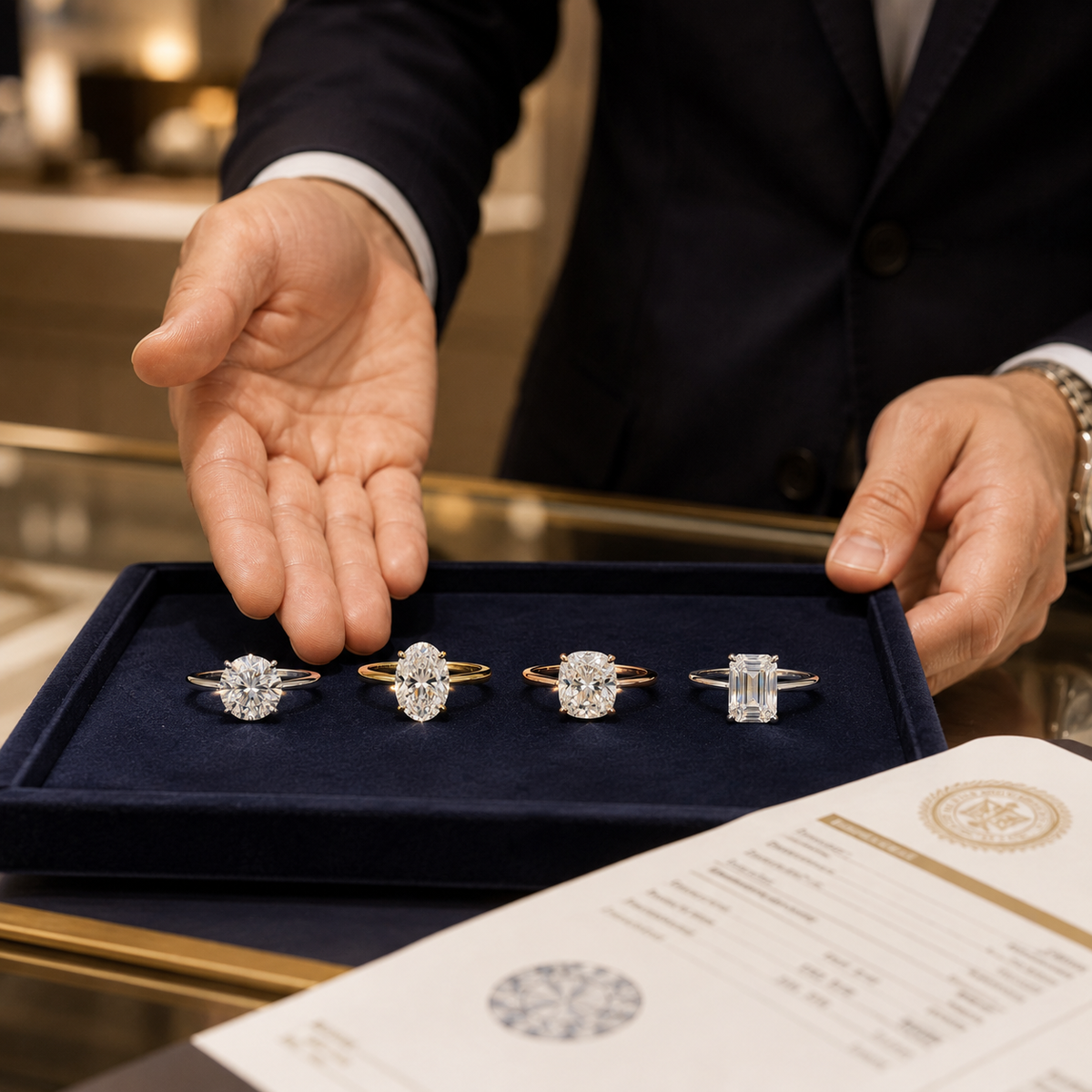
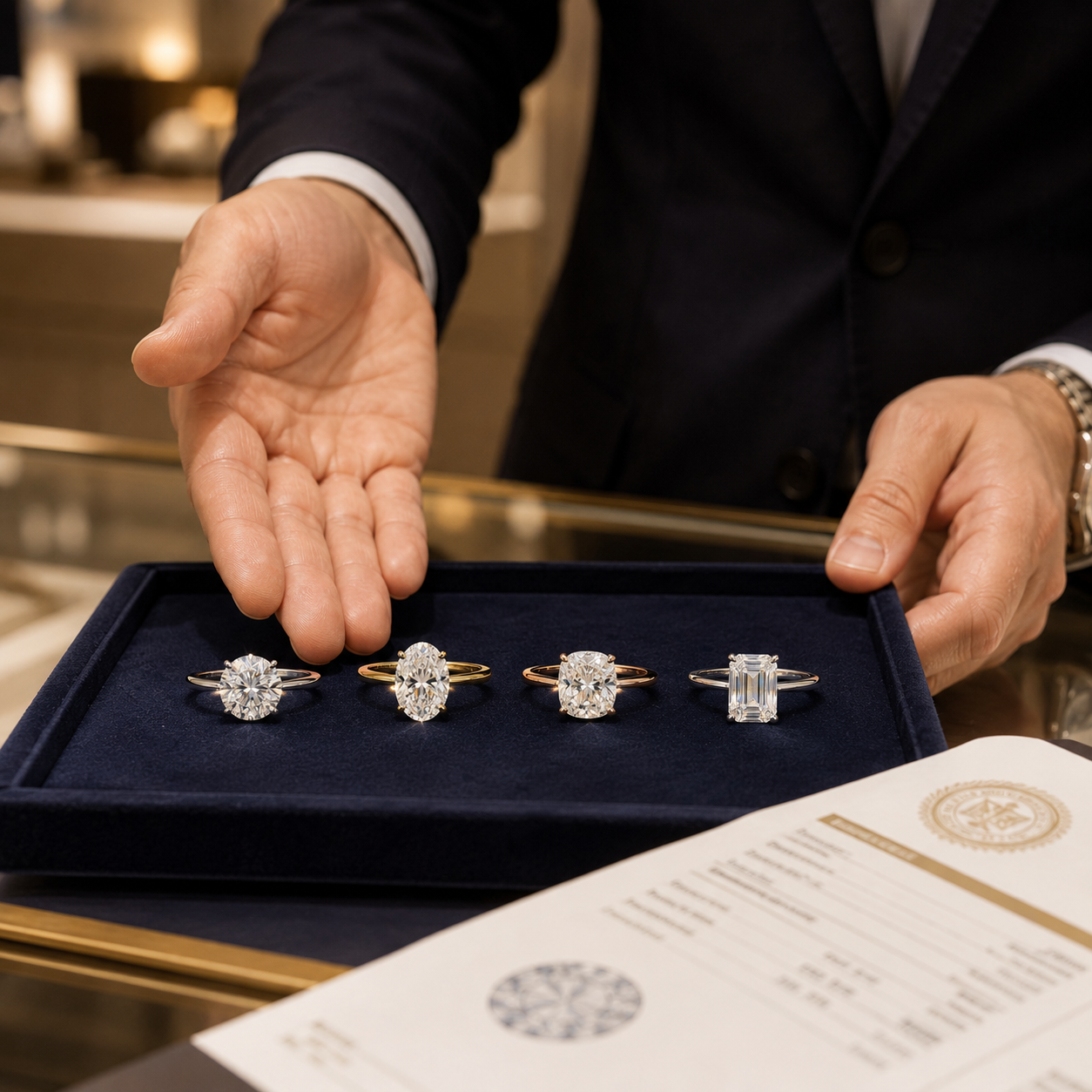
Shape can change the amount of finger coverage you see. Elongated shapes often create a longer visual footprint, while round stones tend to look more compact but can deliver excellent brilliance when well cut.
Round Brilliant
Round is the classic choice and a strong option if sparkle is your first priority. A well-cut 1 carat round can look extremely lively and balanced in a solitaire setting. Its outline is familiar, timeless, and easy to pair with different bands.
Oval
An oval can create the impression of extra finger coverage because of its elongated outline. It is a popular choice for someone who wants a noticeable center stone without simply moving to a heavier carat weight. As with any fancy shape, proportions and the actual outline matter.
Pear and Marquise
Pear and marquise shapes can look particularly long on the finger. Their pointed ends draw the eye along the length of the stone, which can make a one-carat diamond feel visually generous.
Emerald and Cushion
Emerald cuts are known for their clean, open appearance rather than the intense sparkle pattern of a round brilliant. A cushion can feel softer and fuller. Neither is automatically “bigger”; they simply create a different kind of presence.

Can a 1 Carat Diamond Look Bigger With the Right Setting?
Absolutely. The setting acts like a frame around the center diamond, and the frame changes what your eye notices first.
Solitaire
A solitaire puts nearly all the attention on the center stone. A slim, balanced band can create strong contrast, making the diamond feel more prominent without adding extra center-stone carat weight.
Halo
A halo surrounds the center diamond with smaller stones, increasing the overall visual footprint of the ring. It can be a smart choice if you like the look of a larger ring but prefer to keep the center stone around one carat.
Pavé Band
Pavé adds sparkle around the center stone and can make the whole ring feel more detailed and substantial. It does not change the carat weight of the center diamond, but it changes the visual balance of the finished ring.
Three-Stone Designs
Side stones can extend the visual width of a ring. A one-carat center can therefore feel much more substantial when paired with well-proportioned side stones.
Should You Buy Exactly 1.00 Carat?
Not necessarily. One carat is a popular milestone, and popular milestones can affect pricing. GIA specifically points out that weights such as 1.00 ct are “magic sizes” and that a stone just below the milestone can look almost identical while sometimes costing less. GIA's current carat-weight guide discusses this pricing effect.
That means a 0.95, 0.97, or 0.98 ct diamond should not be dismissed simply because it does not say 1.00 on the report. If the measurements, cut, sparkle, and overall appearance are right, the visual difference may be negligible while the price difference can be useful for your budget.
The smart move is to compare stones by their actual specifications and appearance rather than treating 1.00 as a magic number.
Is 1 Carat Enough for a Beautiful Engagement Ring on a Budget?
For many couples, yes. One carat leaves you room to balance the four Cs instead of putting the entire budget into size. That can mean choosing a strong cut, a sensible color grade, an eye-clean clarity grade, and a setting you genuinely love.
This matters because diamond quality is a combination, not a single number. The American Gem Society explains that two diamonds with the same carat weight can differ in value depending on cut, color, and clarity, and that poor cutting can even reduce brilliance. AGS's carat-weight guidance is a useful independent reference.
In practical terms, a 1 carat diamond with a beautiful cut and a well-designed setting can look far more expensive than its carat number suggests. That is often a better buying experience than stretching for a larger stone and compromising on everything else.
How to Choose the Right 1 Carat Diamond: A Simple Checklist
1. Decide how you want the ring to look. Do you want classic sparkle, elongated finger coverage, a vintage feel, or a clean modern outline?
2. Compare measurements. Do not compare 1.00 ct labels alone. Look at length, width, and depth.
3. Prioritize cut. Especially with a round brilliant, cut has a major effect on brightness and sparkle.
4. Check the grading report. Make sure the stone's specifications are documented by a reputable independent laboratory.
5. Look at the ring as a whole. A diamond is only part of the finished piece. Band width, setting height, side stones, and metal all affect the final look.
6. Compare just-below-one-carat options. A 0.95–0.99 ct stone can be worth considering if the visual difference is small and the savings are meaningful.
7. View the diamond in more than one lighting condition. A stone should not be judged only under dramatic jewelry-store lighting or a close-up product photograph.
What Makes a 1 Carat Diamond Look Too Small?
Usually, it is not the one-carat weight itself. A deeper stone, a wider band, a very heavy setting, or a finger with different proportions can change the visual balance. Lighting and photography can also make a ring seem dramatically different.
If you have tried on a one-carat ring and felt underwhelmed, do not immediately assume you need 1.5 or 2 carats. Try a different shape, a slimmer band, a halo, or a better-cut stone first. Sometimes the problem is proportion, not size.
What Makes a 1 Carat Diamond Look Bigger?
The easiest visual tools are shape, proportions, setting, and contrast. An elongated oval or marquise can create more length across the finger. A slim band can make the center stone stand out. A halo can expand the overall outline. Strong cut quality can also make the diamond attract more attention because of its brightness and scintillation.
None of these tricks changes the actual carat weight. They simply help you get more visual impact from the weight you are already buying.
Frequently Asked Questions
Is 1 carat big enough for an engagement ring?
Yes. A 1 carat diamond is a substantial and popular engagement-ring size. Whether it looks large enough depends on the diamond's shape, proportions, setting, and the wearer's finger.
Does 1 carat mean the diamond is 1 carat in size?
No. Carat measures weight. It does not directly state the diamond's visible length or width. Two 1 carat diamonds can look different from the top.
Is a 0.90 carat diamond too small compared with 1 carat?
Not necessarily. The visual difference between nearby weights can be small, especially when the diamonds have similar proportions. Compare the actual measurements and appearance rather than the labels alone.
What diamond shape looks biggest at 1 carat?
Elongated shapes such as oval, pear, and marquise can create strong visual coverage because of their length. However, individual proportions matter, so there is no single shape that will look biggest for everyone.
Is a 1 carat diamond good for a solitaire engagement ring?
Yes. A 1 carat diamond can work especially well in a solitaire because the setting keeps the center stone as the main visual focus. A well-proportioned band can make the diamond feel balanced and prominent.
Can a halo make a 1 carat diamond look bigger?
Yes. A halo adds smaller diamonds around the center stone, increasing the overall visual footprint of the ring. It changes the appearance of the finished ring rather than increasing the center diamond's actual carat weight.
Should I buy exactly 1.00 carat?
Not automatically. Because 1.00 ct is a popular milestone, nearby weights such as 0.95–0.99 ct can sometimes offer better value. Compare the actual diamond rather than paying extra simply to reach a round number.
Does cut matter more than carat?
For visual beauty, cut can have an enormous effect. A well-cut diamond can return more light and look more lively than a heavier diamond with weaker proportions. Carat is important, but it should be considered alongside cut, color, clarity, and measurements.
Final Thoughts
So, is a 1 carat diamond big enough for an engagement ring? Yes — and for many people, it is an excellent place to start.
One carat gives you enough weight to create a noticeable center stone while still leaving plenty of room to make smart decisions about cut, shape, clarity, color, and the setting. More importantly, it keeps you from thinking that the biggest number automatically creates the best-looking ring.
If you want a larger-looking ring without a much larger center stone, explore elongated shapes, a well-balanced halo, a slimmer band, or a setting that gives the diamond more visual breathing room. If value matters, compare stones just below one carat and look carefully at their actual measurements.
The best engagement ring is not the one that wins a carat-weight competition. It is the one that looks beautiful to you, feels right on the hand, fits the budget, and still feels like the ring you wanted years from now.
A beautiful 1 carat diamond does not need to prove its size. When the cut, proportions, shape, and setting work together, the ring simply looks right.
|
Find a Diamond That Looks Right for You Explore Auvera Craft's fine diamond jewelry and compare shapes, settings, and proportions with confidence. |
© 2026 Auvera Craft · Handcrafted Fine Jewelry · USA

