
Cart
0
AUVERA CRAFT
Handcrafted Fine Jewelry · Jewelry Guide · 2026
Gold Ring Guide
10K vs. 14K vs. 18K Gold for Everyday Rings
Gold karat is one of the most misunderstood details in jewelry buying. This guide gives you the honest, practical breakdown — so you choose right the first time.
If you have ever shopped for a gold ring and found yourself staring at stamps like 10K, 14K, and 18K without knowing what any of them actually mean for how the ring looks, how it wears, or how long it lasts — this guide is for you.
Gold karat is one of the most misunderstood details in jewelry buying. Most people assume higher is always better. The reality is more interesting than that. Each karat has genuine strengths and genuine tradeoffs, and the right choice depends entirely on how the ring will be worn, what it will look like, and what matters most to the person wearing it.
This guide covers everything: what karat actually means, how 10K, 14K, and 18K compare across every factor that matters, which gold color suits which skin tone, and how to choose confidently for yourself or someone you love.
What Does Gold Karat Actually Mean?
Karat measures the proportion of actual gold in a piece of jewelry. Twenty-four karat represents gold in its purest form — but unalloyed gold is far too malleable for rings worn daily. It bends, scratches, and loses its shape quickly. To make it wearable, jewelers combine it with strengthening metals to produce an alloy that holds up to real life.
The karat number reflects exactly how much of that finished alloy is genuine gold:
10K gold is 41.7 percent gold by content, with the balance made up of strengthening metals such as silver, copper, zinc, or nickel.
14K gold reaches 58.3 percent gold content, with the remaining portion being the alloy blend.
18K gold is 75 percent gold by content, leaving just a quarter of the metal as alloy.
That single principle — how much gold versus how much alloy — explains nearly every difference in appearance, durability, price, and skin compatibility between the three options.
10K Gold — The Most Durable and Most Affordable
Because 10K contains the smallest proportion of gold and the largest proportion of hardening metals, it is the toughest alloy in everyday jewelry. It resists scratching, holds its shape under physical stress, and handles constant daily wear better than higher karat options. For anyone who works with their hands, exercises regularly, or simply wants a ring they never have to think about, 10K is genuinely hard to beat on durability alone.
The lower gold proportion also makes it the most budget-friendly choice at every quality level, since raw material costs directly reflect how much gold is in the piece.
The visual tradeoff is a slightly paler, less warm tone compared to 14K and 18K. In yellow gold, holding the two side by side makes the difference clear — though many wearers find it disappears entirely once the ring is on. In white and rose gold, the color gap between 10K and 14K is far harder to notice.
One consideration for those with sensitive skin: the higher alloy content means greater exposure to metals like nickel, which can trigger reactions in some people. Anyone with known metal sensitivities is generally better served by 14K or 18K.
10K gold is best for: Active wearers, budget-conscious buyers, rings intended for daily rough use, and anyone who prioritizes durability above all else.
14K Gold — The Most Recommended for Everyday Rings
14K gold represents the point where gold content and alloy strength land in near-perfect balance — which is why it has become the standard recommendation for everyday jewelry across the USA.
The 58.3 percent gold content produces a noticeably richer, warmer color than 10K, much closer to the classic gold tone most buyers have in mind. At the same time, the alloy component keeps it considerably harder and more scratch-resistant than 18K. A 14K ring worn daily for years will look far better than an 18K piece under the same conditions.
The vast majority of fine jewelry sold through reputable US jewelers is 14K. Engagement rings, wedding bands, and everyday pieces intended for continuous wear are almost universally recommended at this karat because the balance works so well — durable enough for daily life, beautiful enough for any occasion, and priced accessibly enough that buyers can invest in better stones or settings without compromise.
For people with metal sensitivities, 14K is a meaningful step up from 10K — the lower alloy proportion reduces the chance of a reaction.
14K gold is best for: Engagement rings, wedding bands, everyday rings, and anyone seeking the ideal combination of appearance, durability, and value.
18K Gold — The Richest Color and the Most Luxurious Feel
At 75 percent gold content, 18K is the highest karat used in mainstream fine jewelry. The visual result is a noticeably deeper, more saturated color — immediately visible when placed next to 14K. In yellow gold particularly, 18K carries a warmth and richness that many buyers find more closely matches their ideal image of gold jewelry.
Beyond color, 18K simply feels different. More gold and less hardening alloy gives it a softness and weight that reads as genuinely luxurious. For pieces worn on special occasions rather than daily, this characteristic is entirely an advantage.
The durability tradeoff is real, however. Greater gold content means increased susceptibility to surface marks and scratching compared to 14K. Under years of daily wear — especially for hands-on lifestyles — an 18K ring will show more surface evidence of use. Many wearers appreciate the way it develops character over time, but it is worth understanding before committing.
18K also sits at the top of the price range, reflecting its higher gold content in the material cost.
For anyone with metal sensitivities, 18K is the most hypoallergenic mainstream option. With only 25 percent alloy, exposure to potential irritants is at its lowest.
18K gold is best for: Statement pieces, occasion rings, buyers who prioritize maximum color depth, and anyone with metal sensitivities.
Yellow Gold, White Gold, and Rose Gold — Which Color Is Right?
All three gold colors are produced in 10K, 14K, and 18K. The color comes from the specific metals in the alloy blend — not from the karat level. Here is what each offers and who it suits best.
Yellow Gold
Yellow gold is the most traditional choice and the most widely purchased metal for rings in the USA in 2026. Its warm, rich tone is timeless, works beautifully alongside diamonds and colored stones, and complements warmer complexions particularly well — though it flatters every skin tone when chosen in the right style and karat.
For everyday rings, 14K yellow gold is the standard recommendation, offering the classic gold look with the durability needed for daily life. 18K yellow gold carries a deeper, more saturated warmth that is visually stunning but benefits from a little more care.
White Gold
White gold is produced by blending gold with white-toned metals — commonly palladium or silver — then finishing the surface with a layer of rhodium to achieve its characteristic bright, mirror-like look. It has a clean, contemporary appearance that pairs exceptionally well with diamonds and suits cooler skin tones, though it works equally well on any complexion.
The maintenance reality of white gold is worth knowing before purchase. The rhodium surface layer gradually wears away with daily use, eventually exposing a slightly warmer tone underneath. Having the ring re-plated restores the original finish and is a quick, affordable service at any jeweler — most pieces need it every one to three years — but it is an ongoing consideration unique to white gold.
Rose Gold
Rose gold draws its distinctive warm blush color from its copper alloy content. A higher copper proportion produces a deeper, more saturated rose tone. That same copper also makes rose gold exceptionally durable — frequently tougher than yellow or white gold at an equivalent karat — which makes it a strong candidate for everyday rings.
Rose gold has held strong popularity for well over a decade with no signs of decline. It suits warm and neutral skin tones particularly beautifully and brings a romantic, personal quality that many wearers love. It pairs especially well with oval, pear, and cushion cut stones.
Karat Markings — What to Look For
Any genuine gold ring from a reputable US jeweler will carry a hallmark stamp confirming its karat. Knowing how to read these markings protects you as a buyer.
10K gold appears as 10K or 417 — the number reflecting its 41.7 percent gold proportion.
14K gold appears as 14K or 585 — reflecting its 58.3 percent gold content.
18K gold appears as 18K or 750 — reflecting its 75 percent gold content.
These markings are found on the inner surface of the band. On very narrow styles the stamp may require close inspection, but it should always be present on any piece sold by a trustworthy retailer. A ring described as gold that carries no hallmark is a significant warning sign.
Which Karat Should You Choose? A Simple Decision Guide
Choose 10K if: You need maximum durability for an active lifestyle, you are working within a tight budget, or you want a ring that handles daily rough use without concern.
Choose 14K if: You want the best all-around combination of color, durability, and value. This is the right answer for most everyday rings, engagement rings, and wedding bands. When uncertain, 14K is almost always the correct choice.
Choose 18K if: Color depth and a luxurious feel matter more than maximum hardness. You wear jewelry carefully or primarily for special occasions. You have metal sensitivities and want to limit alloy exposure. Budget is not a primary concern.
Gold Rings for Women — What Works Best in 2026
The most popular gold ring styles among women in the USA right now reflect a mix of enduring preferences and current trends.
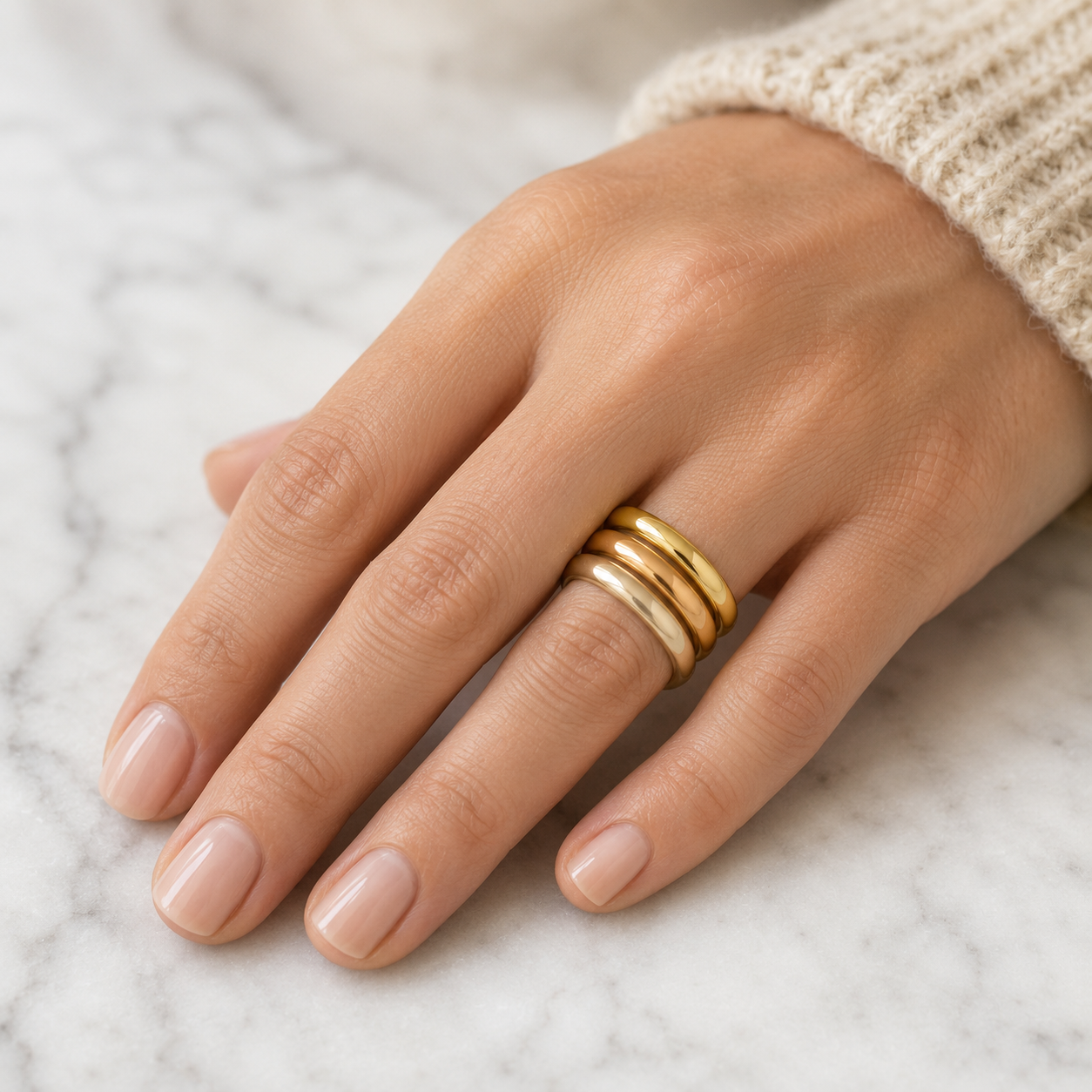
Slim stacking bands in 14K yellow, white, or rose gold remain the most versatile purchase in the category — they wear beautifully on their own and layer well with engagement rings or other pieces. Two or three thin bands in mixed gold tones has become one of the most common everyday jewelry combinations.
Signet rings in 14K gold have grown significantly in popularity. The flat top surface lends itself to engraving — initials, a date, a meaningful symbol — which gives a daily-wear ring a deeply personal dimension.
Birthstone rings in 14K gold are consistently popular as both gifts and personal purchases. A colored stone set in yellow gold creates a warm, classic pairing; the same stone in white gold delivers a cooler, more contemporary feel.
For engagement rings specifically, 14K yellow gold and 14K white gold remain the two most requested metal choices, with rose gold as a close and growing third option.
Caring for Your Gold Ring
Gold jewelry needs very little attention to maintain its appearance, but a handful of simple habits make a real difference over time.
Take your ring off before entering chlorinated swimming pools or hot tubs. The chemicals in treated water can gradually affect gold alloys and lead to surface discoloration, particularly at lower karat levels.
Remove it before handling household cleaning agents or applying perfume and hand lotion. These products contain compounds that can dull the surface and compromise the finish over repeated exposure.
To freshen your ring at home, place it in a small bowl of lukewarm water with a drop of gentle dish soap and let it soak briefly. Use a soft-bristled brush to work around the setting and band, rinse under clean water, and pat dry with a lint-free cloth.
Store each gold ring separately when not wearing it — gold can mark other jewelry and be marked in return. A fabric pouch or a divided jewelry box keeps pieces protected without added effort.
Quick Reference — Gold Karat Guide
|
Factor |
10K |
14K |
18K |
|---|---|---|---|
|
Gold content |
41.7% |
58.3% |
75% |
|
Durability |
Highest |
Very good |
Good |
|
Color richness |
Pale |
Rich |
Deepest |
|
Price |
Most affordable |
Mid range |
Most expensive |
|
Best for |
Active daily wear |
All round everyday |
Special occasions |
|
Hypoallergenic |
Least |
Better |
Best |
|
US stamp |
10K or 417 |
14K or 585 |
18K or 750 |
Find Your Perfect Gold Ring at Auvera Craft
At Auvera Craft, our gold rings are crafted in 14K and 18K across yellow, white, and rose gold. Whether you are selecting an engagement ring, a wedding band, or a piece you plan to wear every day for years to come, our team will help you find the right metal, the right karat, and the right style for the life you actually live.
SHOP GOLD RINGS →
© 2026 Auvera Craft · Handcrafted Fine Jewelry · USA

