
Cart
0

You may also like
A Guide to Unusual Diamond Cuts: Portuguese, Rose, Portrait, Kite and More 2026
You may also like
Rare Diamond Cuts Explained: From Portuguese and Rose to Modern Custom Shapes 2026
You may also like
Design Your Dream Ring: Exploring Custom Cut Lab Grown Diamonds in 2026

925 Meaning on Jewelry: What the Sterling Silver Stamp Really Means in 2026
A Complete Guide to 925 Sterling Silver, Jewelry Stamps, Purity, Quality & Care
Quick Summary
If you have ever noticed the number 925 stamped on jewelry, it usually refers to the purity of the silver used in the piece. The number 925 means that the metal contains 925 parts pure silver out of 1,000 parts, or approximately 92.5% silver.
The remaining 7.5% is typically made up of other metals that help make silver stronger, more durable and easier to use for jewelry. This standard is commonly known as 925 sterling silver.
Understanding the 925 meaning on jewelry can help you read jewelry stamps, compare sterling silver with plated products, understand tarnishing and make more informed buying decisions.
Key Takeaways
- 925 means the jewelry is marked as 925 parts silver per 1,000 parts metal.
- 925 sterling silver is commonly described as 92.5% silver and 7.5% other alloy metals.
- The remaining alloy helps improve strength and workability.
- A 925 stamp is commonly found inside rings, on clasps, chains, pendants and other discreet areas.
- 925 sterling silver is different from silver-plated jewelry.
- A 925 stamp is useful information, but the stamp alone should not be treated as complete proof of authenticity.
- Sterling silver can tarnish naturally over time and can usually be cleaned with appropriate silver-care methods.
- Storage, chemicals, moisture and frequent exposure can affect the appearance of silver jewelry.
Quick Answer: What Does 925 Mean on Jewelry?
The 925 meaning on jewelry refers to a silver fineness standard. A piece marked 925 is intended to contain 925 parts silver per 1,000 parts of alloy, equivalent to 92.5% silver.
Because pure silver is relatively soft for many jewelry applications, sterling silver uses additional alloy metals to create a material that is more practical for rings, necklaces, earrings, bracelets and other everyday pieces.
Who Is This Guide For?
This guide is useful if you are buying, wearing, gifting or trying to understand jewelry marked 925. It is especially helpful for anyone comparing sterling silver with silver-plated jewelry or trying to understand what a jewelry purity stamp actually tells you.
It can also help if you have inherited an older piece of jewelry and want to understand the meaning of the number stamped somewhere on the item.
Introduction
Jewelry often contains tiny markings that can tell you important information about the material. One of the most recognizable is the number 925.
You may find it inside a ring, near the clasp of a necklace, on a bracelet or on the back of a pendant. At first glance, it may simply look like a product code. In many cases, however, it is a fineness indication connected with sterling silver.
Learning the 925 meaning on jewelry makes it easier to understand silver purity, recognize common terminology and ask better questions when purchasing silver jewelry.
What Is 925 Sterling Silver?
925 sterling silver is a silver alloy containing 92.5% silver by the millesimal fineness convention, with the remaining portion made up of other metals.
Pure silver is softer than the alloy typically used for jewelry. Adding other metals changes the physical properties of the material, making it more suitable for shaping, polishing and everyday jewelry construction.
This is why the terms 925 silver and sterling silver are commonly used together when describing jewelry made to this standard.

What Does the Number 925 Actually Represent?
The number 925 represents parts per thousand. In simple terms:
| Mark | Silver Content | Meaning |
|---|---|---|
| 925 | 92.5% | 925 parts silver per 1,000 parts alloy |
| 999 | 99.9% | Very high-purity or fine silver |
| 800 | 80% | Lower silver fineness than 925 |
The important point is that 925 is a fineness number. It does not mean that the jewelry weighs 925 grams, costs 925 units of currency or was necessarily made in a particular country.
Why Is Sterling Silver 92.5% Silver?
Silver jewelry needs to balance purity with practical performance. Very high-purity silver can be relatively soft, so jewelry makers commonly use an alloy to improve strength, durability and workability.
The 92.5% silver standard provides a widely recognized balance between silver content and the physical characteristics needed for jewelry manufacturing.
What Metals Are Mixed With Sterling Silver?
The remaining portion of sterling silver is made from alloy metals. Copper has traditionally been associated with sterling silver alloys, although exact compositions can vary depending on the manufacturer and product.
These additional metals help create an alloy that is easier to manufacture and more practical for jewelry than very soft high-purity silver.
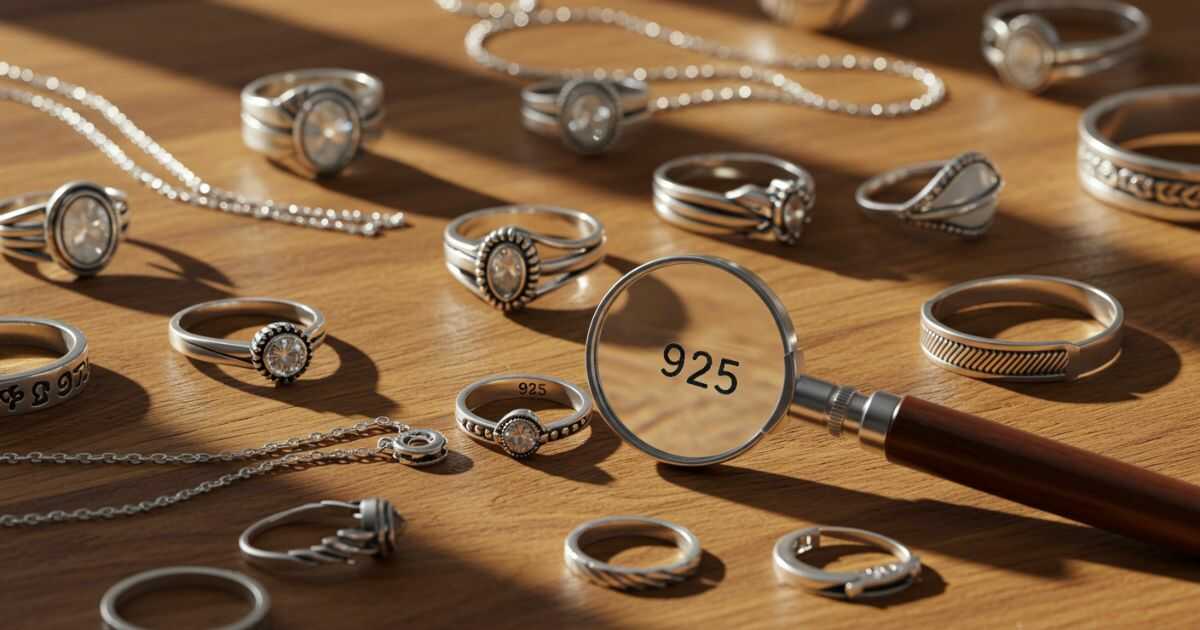
Where Can You Find a 925 Stamp on Jewelry?
Jewelry makers usually place purity marks in areas that are visible during inspection but do not interfere with the design.
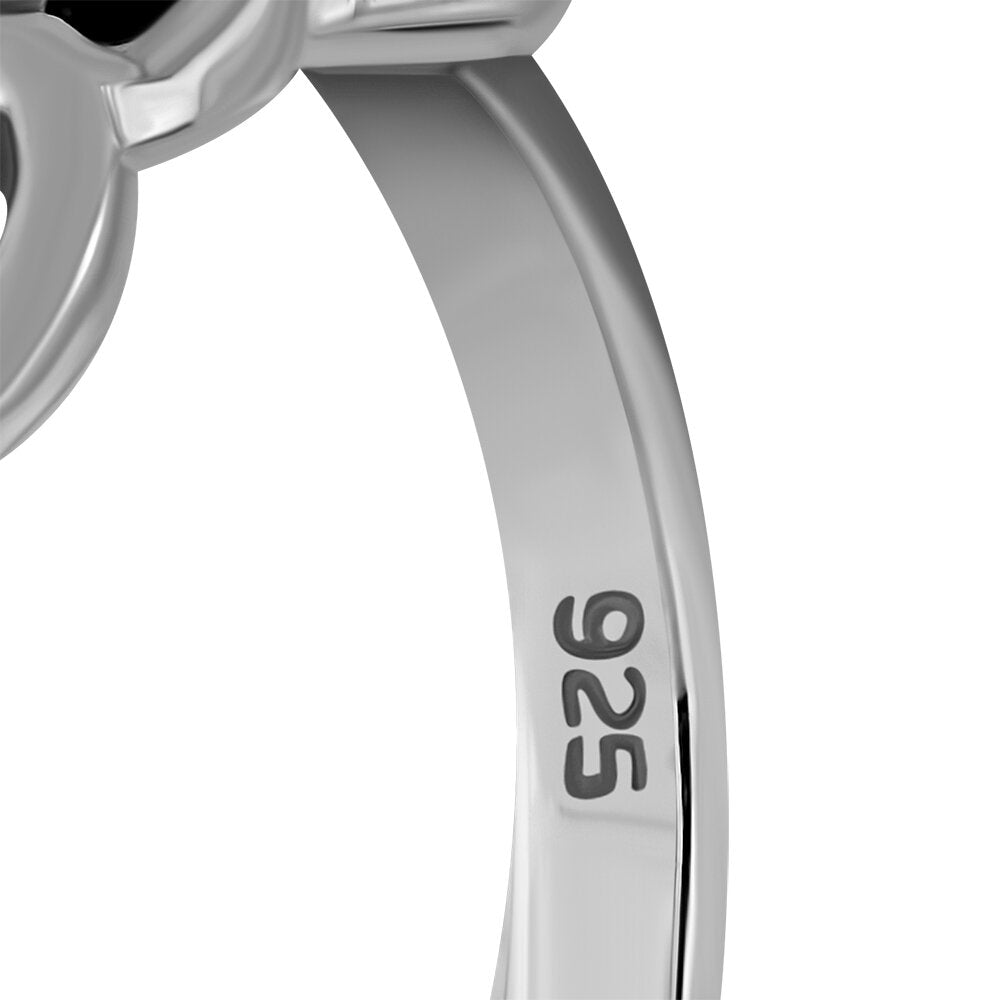
- Rings: commonly inside the band.
- Necklaces: often near the clasp or on a small tag.
- Bracelets: frequently near the clasp.
- Pendants: may have the mark on the back or bail.
- Earrings: may be marked on a post, back or another small component.
Because jewelry marks can be extremely small, a magnifying glass or phone camera with good lighting can make the stamp easier to inspect.
925 vs Sterling Silver: Are They the Same?
In common jewelry terminology, 925 silver and sterling silver generally refer to the same 92.5% silver standard.
| Term | What It Usually Means |
|---|---|
| 925 Silver | Silver alloy with 925 parts silver per 1,000 |
| Sterling Silver | Common name for the 92.5% silver standard |
| 925 Sterling Silver | Both terms combined to describe the same fineness standard |
925 Silver vs Silver Plated Jewelry
One of the most important differences to understand is the difference between sterling silver and silver plating.
| Feature | 925 Sterling Silver | Silver Plated |
|---|---|---|
| Base material | Silver alloy throughout the material | Different base metal with silver coating |
| Silver content | 92.5% under the 925 standard | Thin outer layer of silver |
| Durability of silver layer | Not dependent on a thin silver coating | Coating can wear over time |
| Common marking | May carry a 925 or sterling mark | Depends on the product and applicable marking system |
A silver-plated item can look very similar to sterling silver when new. The key difference is the construction of the material rather than simply its surface appearance.
Does 925 Mean the Jewelry Is Real Silver?
A genuine 925 mark is intended to indicate the 925 silver standard. However, a stamped number by itself should not automatically be treated as conclusive proof that an item is genuine.
Jewelry marks can be copied or misrepresented. When authenticity matters, consider the seller's reputation, product documentation, applicable hallmarking requirements and professional testing where appropriate.
Formal hallmarking systems can include additional marks beyond a fineness number. For example, UK hallmarking uses combinations of marks that can identify fineness, assay office and sponsor information. :contentReference[oaicite:2]{index=2}
How to Check if 925 Jewelry May Be Authentic
If you already own a piece marked 925, start with a visual inspection. Look closely at the quality of the stamp, the overall construction and any additional markings.
1. Inspect the 925 Mark
Look for a clear and appropriately placed 925 mark. A poorly formed, inconsistent or suspicious-looking mark deserves additional investigation.
2. Check the Overall Construction
Examine clasps, solder points, edges, stones and finishing. Poor workmanship does not automatically mean an item is fake, but it can be a reason to investigate further.
3. Look for Additional Information
Depending on where the jewelry was made and sold, additional marks may identify a maker, sponsor, assay office, country or other information.
4. Consider Professional Testing
If the item's value is significant or authenticity is important, professional testing can provide stronger evidence than relying only on appearance or a stamp.

Does 925 Silver Tarnish?
Yes. 925 sterling silver can tarnish over time. Tarnishing is a surface reaction that can cause silver jewelry to become darker or less bright.
Exposure to air, moisture, cosmetics, household chemicals and other substances can contribute to changes in the appearance of silver jewelry.
Tarnish does not necessarily mean that the jewelry is fake. It is a normal care issue associated with silver.
How to Clean 925 Sterling Silver Jewelry
Gentle cleaning is generally preferable to aggressive scrubbing. Start by checking whether the piece contains pearls, gemstones, special finishes or delicate components that may require different care.
- Use a soft, clean jewelry cloth when appropriate.
- Wipe away fingerprints and surface residue gently.
- Avoid harsh household chemicals.
- Do not aggressively scrub delicate surfaces.
- Dry the jewelry thoroughly after any compatible cleaning process.
- Follow the manufacturer's care instructions when available.
How to Store 925 Silver Jewelry
Proper storage can help reduce unnecessary exposure to moisture, air and scratches.
- Keep pieces in a dry storage area.
- Store jewelry separately to reduce scratching.
- Use a soft jewelry pouch or lined box.
- Keep silver away from unnecessary moisture.
- Close necklaces and bracelets before storage to reduce tangling.
Is 925 Silver Good for Everyday Jewelry?
925 sterling silver is widely used for rings, necklaces, bracelets, earrings and other jewelry because the alloy is more practical for jewelry construction than very soft pure silver.
Whether a particular piece is suitable for everyday wear depends on its design, thickness, gemstones, finish, construction and the type of activities it is exposed to.
925 Silver Jewelry Buying Checklist
Before buying jewelry marked 925, consider the following checklist:
| Check | What to Look For |
|---|---|
| Purity mark | Look for a clearly stated 925 or sterling indication where applicable. |
| Seller | Review the seller's reputation and product information. |
| Construction | Inspect clasps, links, settings and finishing. |
| Gemstones | Check how the stones are mounted and what care they require. |
| Returns | Understand the seller's return and exchange policy. |
| Documentation | For higher-value pieces, ask about available authenticity or hallmark documentation. |
Common Mistakes When Reading a 925 Jewelry Stamp
Mistake 1: Assuming 925 Means Pure Silver
925 does not mean 100% pure silver. It indicates 925 parts silver per 1,000 under the fineness system.
Mistake 2: Assuming Every 925 Stamp Is Proof of Authenticity
A mark is useful information, but a counterfeit or incorrectly marked item can still carry a number. Consider the complete evidence when authenticity matters.
Mistake 3: Confusing 925 Silver With Silver Plating
Sterling silver is an alloy containing the 925 silver standard, while silver-plated jewelry has a different base material covered by a layer of silver.
Mistake 4: Thinking Tarnish Means Fake Silver
Tarnishing can occur naturally with sterling silver and is not, by itself, evidence that a piece is counterfeit.
925 Silver vs Other Jewelry Metals
| Material | General Composition | Common Characteristics |
|---|---|---|
| 925 Sterling Silver | 92.5% silver plus alloy metals | Classic silver appearance and widely used for jewelry |
| Fine Silver | Very high silver purity | Softer and less commonly used for durable everyday jewelry |
| Gold | Varies by karat | Higher gold content at higher karat levels |
| Stainless Steel | Steel alloy | Different material with different properties from silver |
Is 925 Silver Valuable?
The value of a piece of 925 silver jewelry is not determined by the stamp alone. The amount of silver, current metal prices, weight, craftsmanship, brand, gemstones, condition, design and market demand can all affect the item's value.
A simple 925 silver item and a designer piece containing the same silver standard can have very different retail prices.
Does 925 Silver Turn Your Skin Green?
Some people notice discoloration on their skin when wearing certain jewelry. This can be influenced by the alloy composition, moisture, sweat, cosmetics and individual skin chemistry.
Skin discoloration does not automatically mean the jewelry is fake. If irritation or persistent skin problems occur, stop wearing the item and seek appropriate advice.
Can 925 Silver Be Rhodium Plated?
Yes. Sterling silver jewelry can be finished with a rhodium coating. Rhodium plating can create a bright, reflective surface and can change the appearance and maintenance characteristics of the jewelry.
When buying rhodium-plated silver, remember that the underlying material can still be 925 sterling silver even though the outer surface has an additional coating.
How to Tell the Difference Between 925 and Fake Silver-Colored Jewelry
Silver-colored appearance alone cannot tell you what a piece is made from. Many different metals and coatings can create a similar visual finish.
Instead of judging by color alone, look at the markings, seller information, construction and available documentation. For valuable pieces, professional testing is a more appropriate way to investigate composition.
Questions to Ask Before Buying 925 Jewelry
- Is the item made from 925 sterling silver throughout?
- Where is the 925 mark located?
- Are there any additional maker or hallmark marks?
- Does the piece contain gemstones or other materials?
- Is the item plated or coated with another metal?
- What care instructions does the seller recommend?
- What is the return or exchange policy?
- Is documentation available for a higher-value piece?
Frequently Asked Questions
What does 925 mean on jewelry?
925 means the metal is identified with a fineness of 925 parts silver per 1,000, equivalent to 92.5% silver.
Is 925 real silver?
925 is the standard commonly used to identify sterling silver containing 92.5% silver. However, a stamped mark alone should not be considered complete proof of authenticity when purchasing a valuable item.
Is 925 silver better than pure silver?
They serve different purposes. Pure silver has higher silver content, while 925 sterling silver uses alloy metals that make it more practical for many jewelry applications.
Does 925 silver tarnish?
Yes. Sterling silver can tarnish over time due to exposure to air, moisture and other substances. Proper cleaning and storage can help maintain its appearance.
Is 925 the same as sterling silver?
In common jewelry terminology, 925 silver and sterling silver generally refer to the same 92.5% silver standard.
Can fake jewelry have a 925 stamp?
A copied or misleading stamp is possible, so the presence of 925 should be considered alongside seller information, construction, documentation and professional testing when necessary.
Where is 925 usually stamped on a ring?
The 925 mark is commonly placed inside the ring band, where it can be inspected without interrupting the visible design.
Can 925 silver be worn every day?
Many 925 silver jewelry pieces are suitable for regular wear, but durability depends on the individual design, construction, finish and exposure to chemicals, moisture and physical activity.
Final Thoughts
The 925 meaning on jewelry is relatively simple: it refers to a silver fineness of 925 parts per 1,000, or approximately 92.5% silver. The remaining portion is alloyed to create a material that is more suitable for jewelry making.
Understanding this small stamp can make a big difference when shopping for silver jewelry. It helps you distinguish common terminology, understand the difference between sterling silver and plated products, and ask better questions about what you are buying.
If authenticity or value is especially important, do not rely on the stamp alone. Consider the seller, construction, documentation and professional testing when appropriate.
|
Discover Timeless Fine Jewelry Explore Auvera Craft's handcrafted fine jewelry and discover elegant pieces designed for timeless everyday and occasion wear. |